Dreidimensionales Gestalten 2
futuristic clay
modern
extravagant
innovative
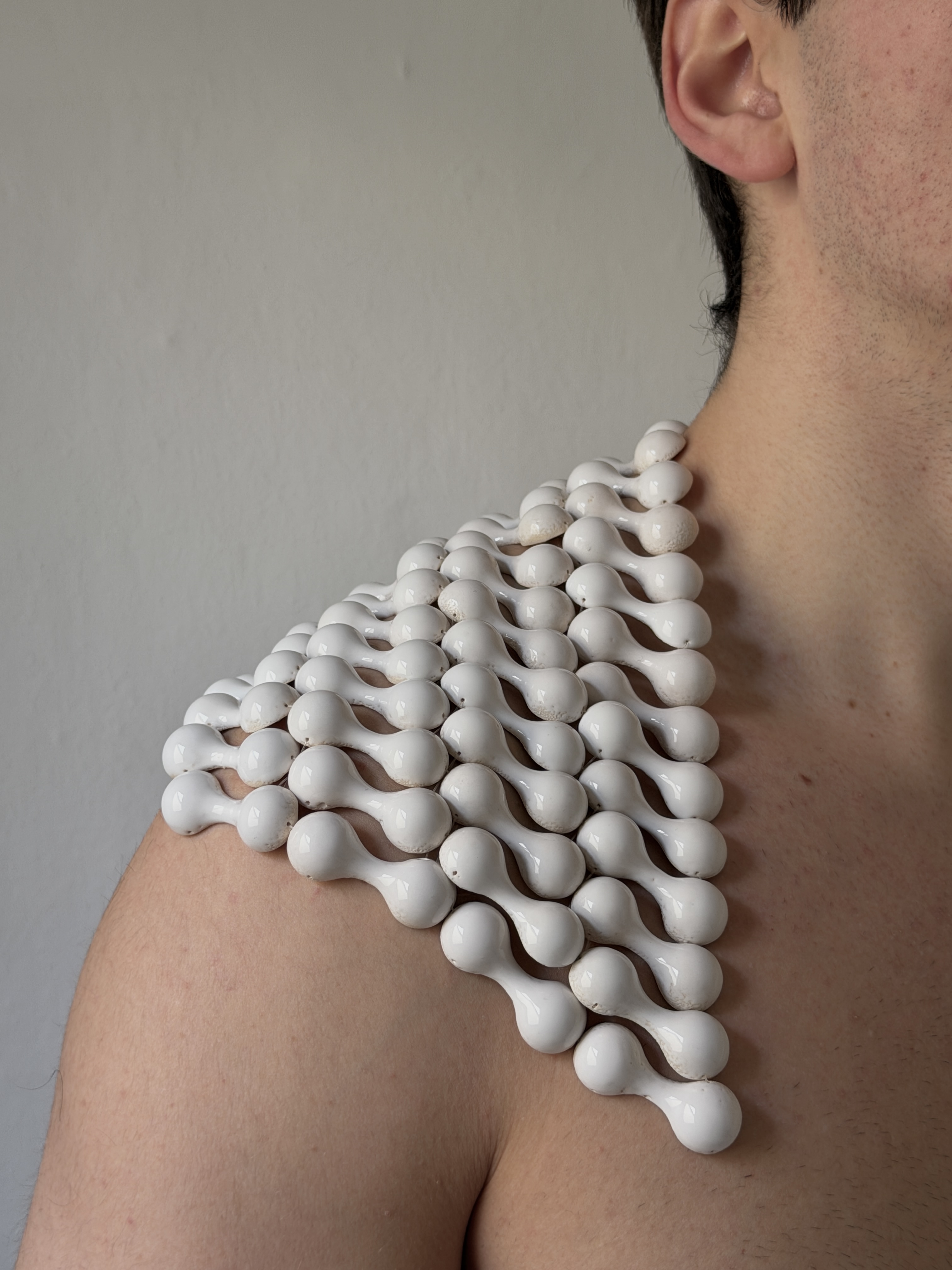
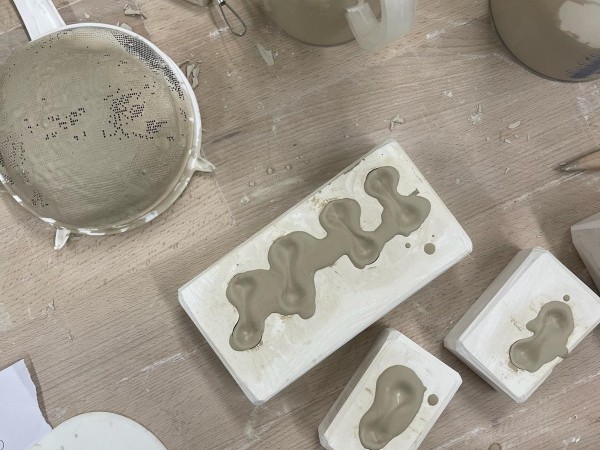
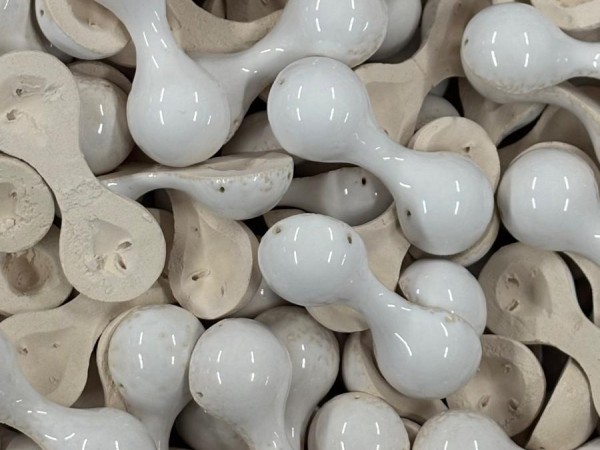
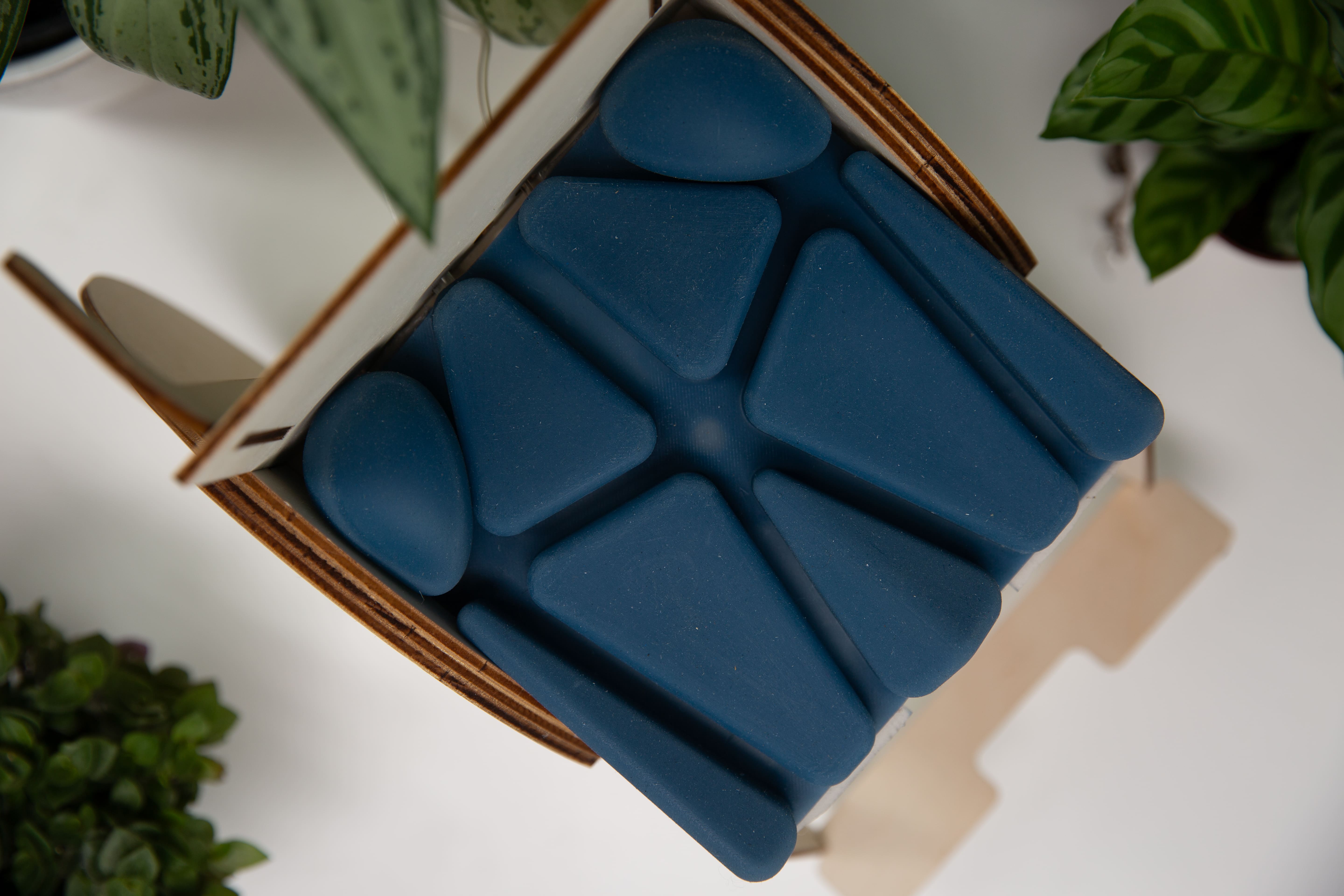
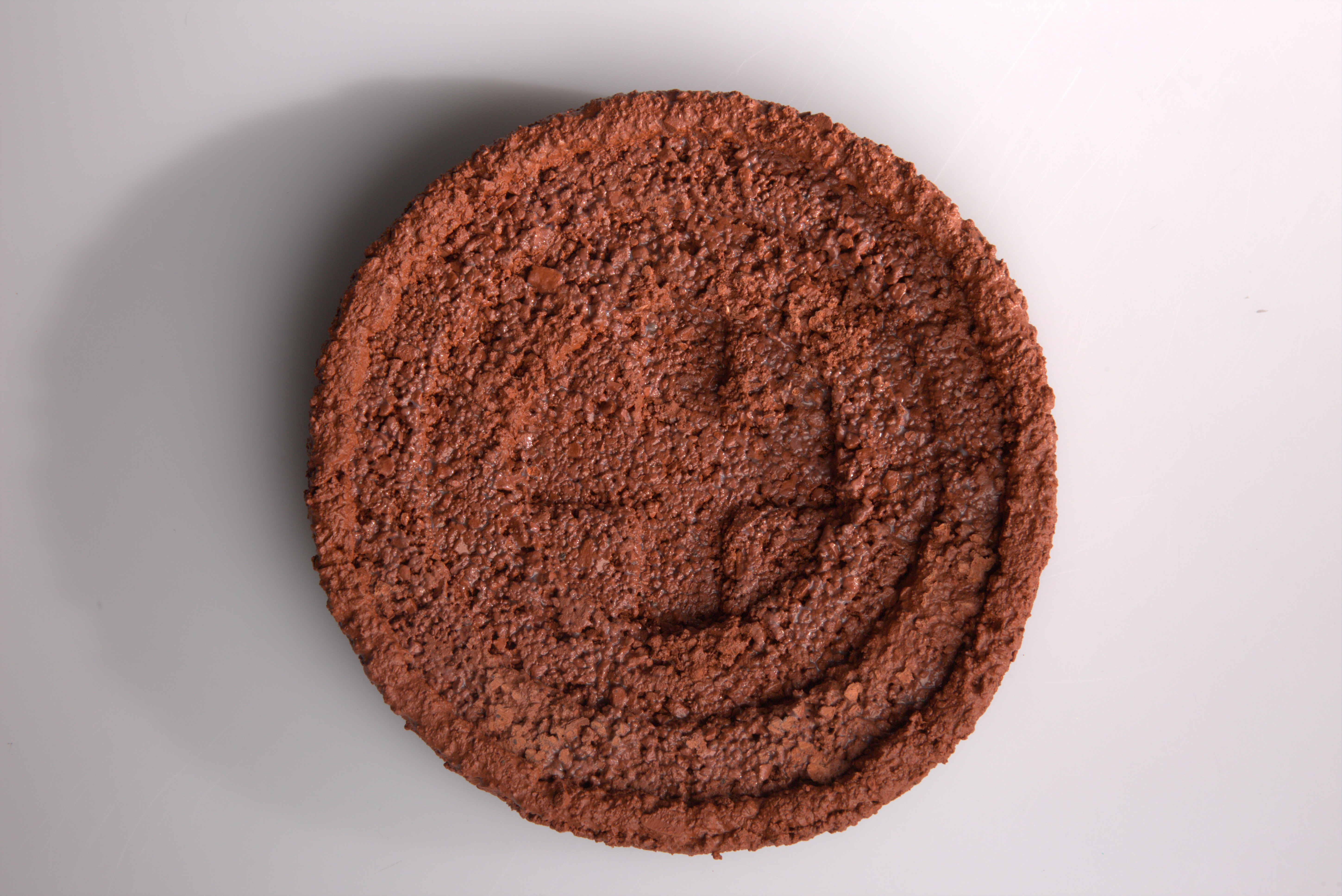
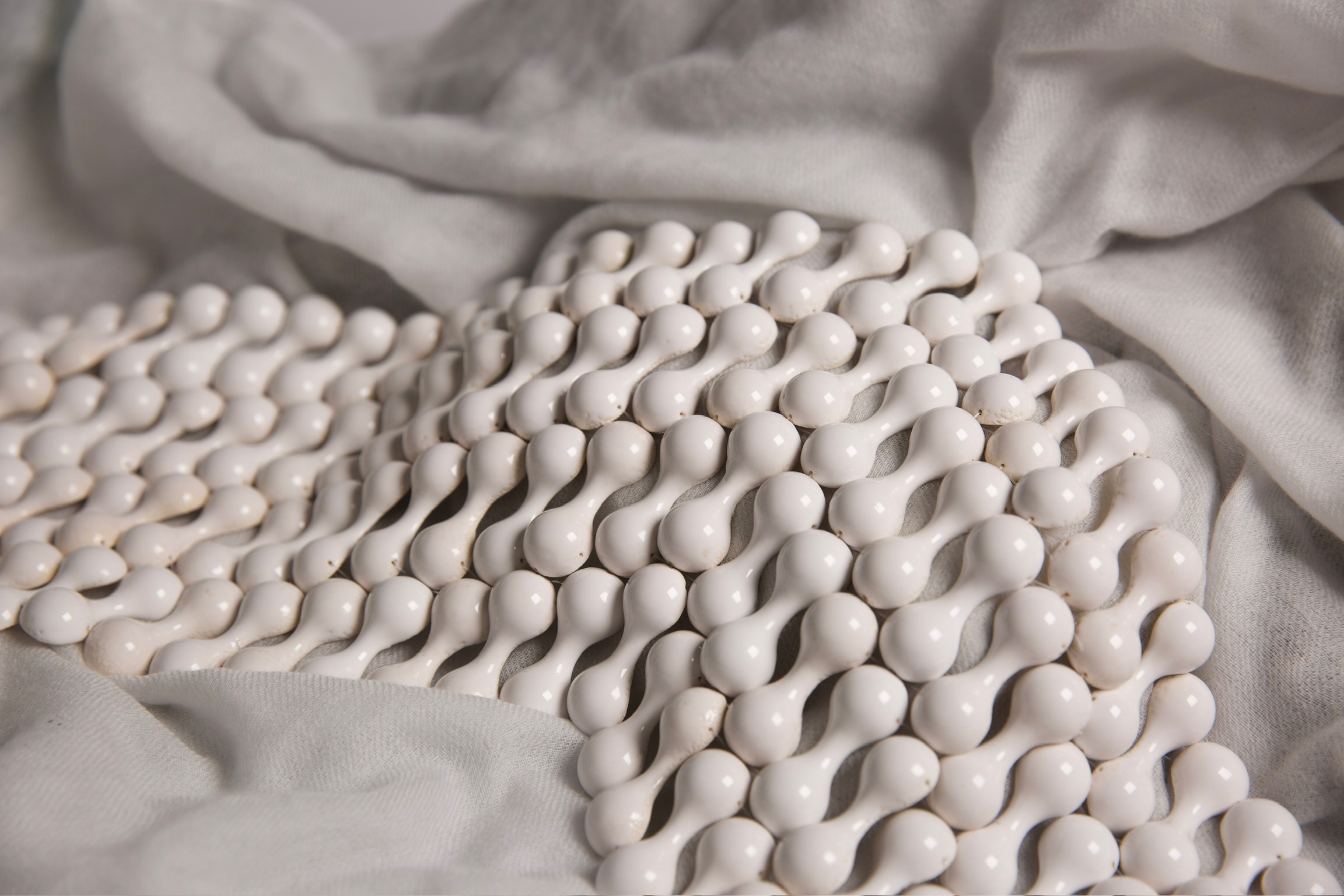
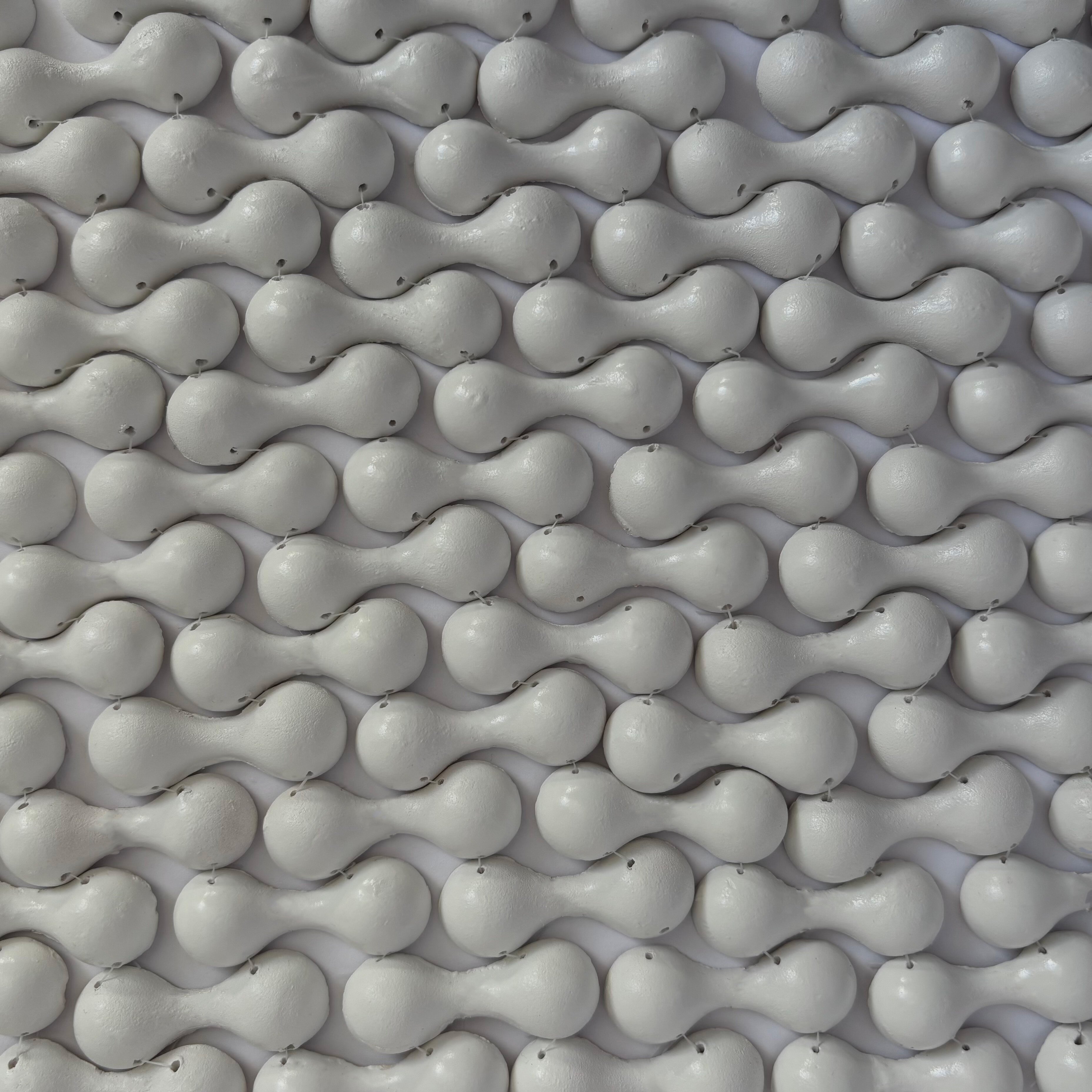
The glazed surface suggests a futuristic, almost synthetic material. Only when the piece is turned, the unglazed clay surface comes into view - an ancient substance, shaped by hand and time. What appears like an innovative and unfamiliar material is in fact one of the oldest and most important commodities used throughout human history.
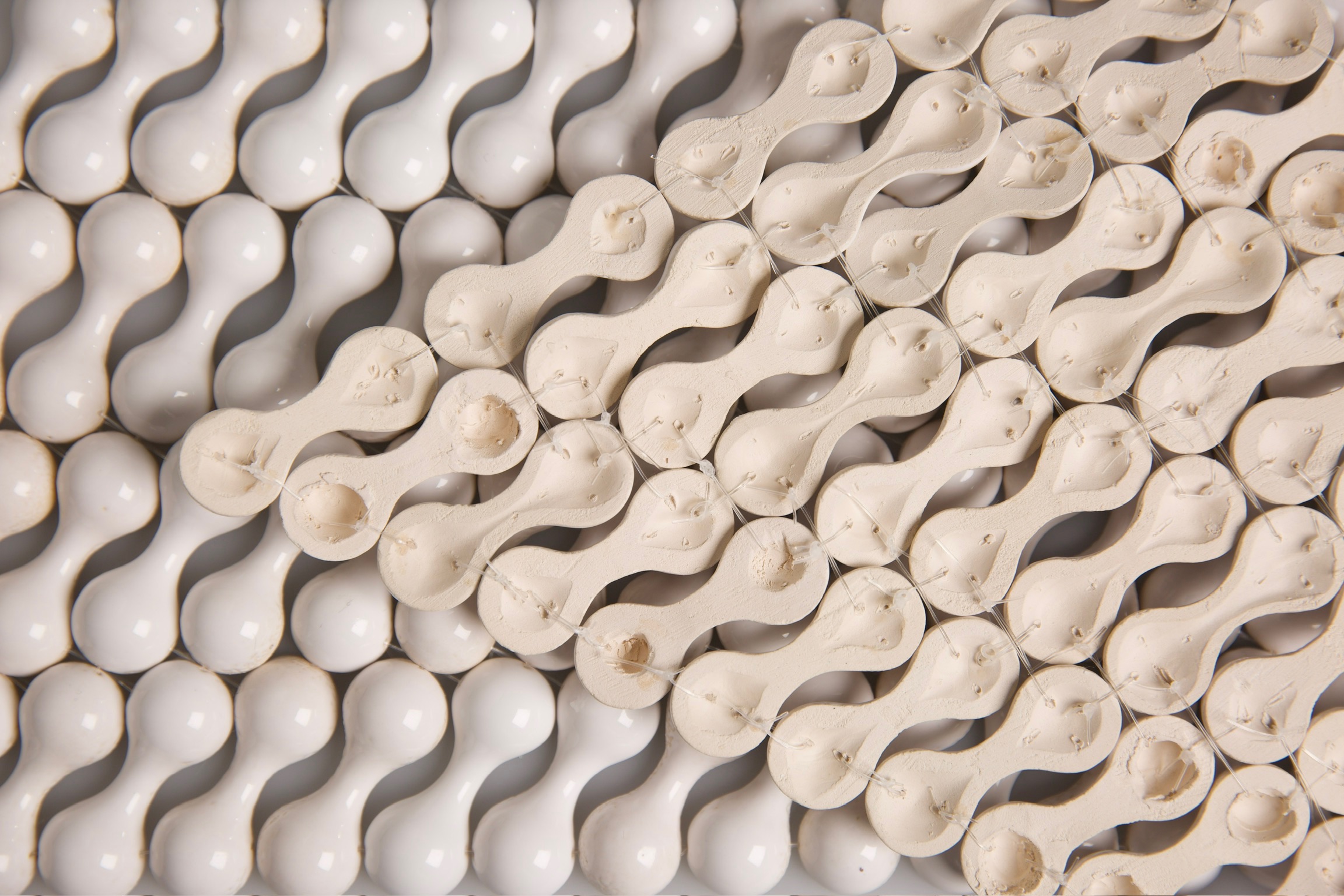
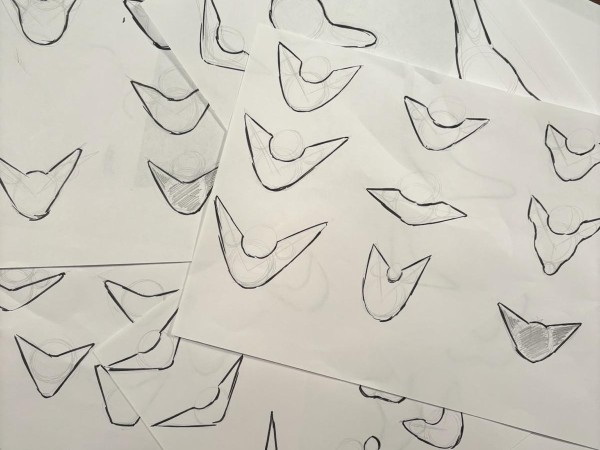
After being placed on a heater, the ceramic piece stores warmth and can be positioned on different parts of the body. Wether placed on the back and shoulders or repositioned on the stomach or legs, its flexible form allows for an individualized fit. The V-shaped design ensures that heat is distributed evenly, combining a therapeutic function with a sculptural, body-focused aesthetic.
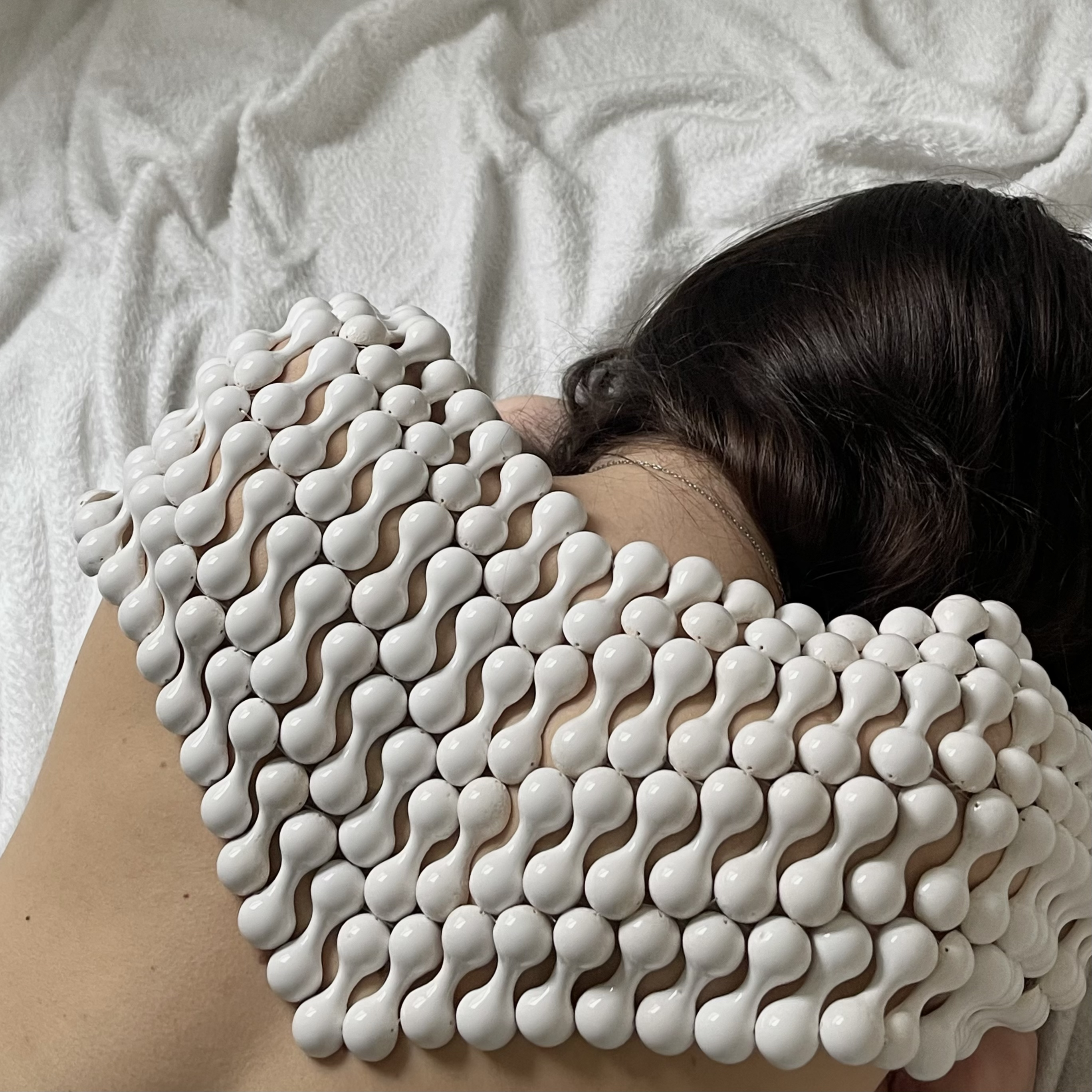
Beyond its warmth, the ceramic piece carries a noticable weight. When placed on the body, the heaviness creates a grounding pressure causing a feeling of safety and stability.