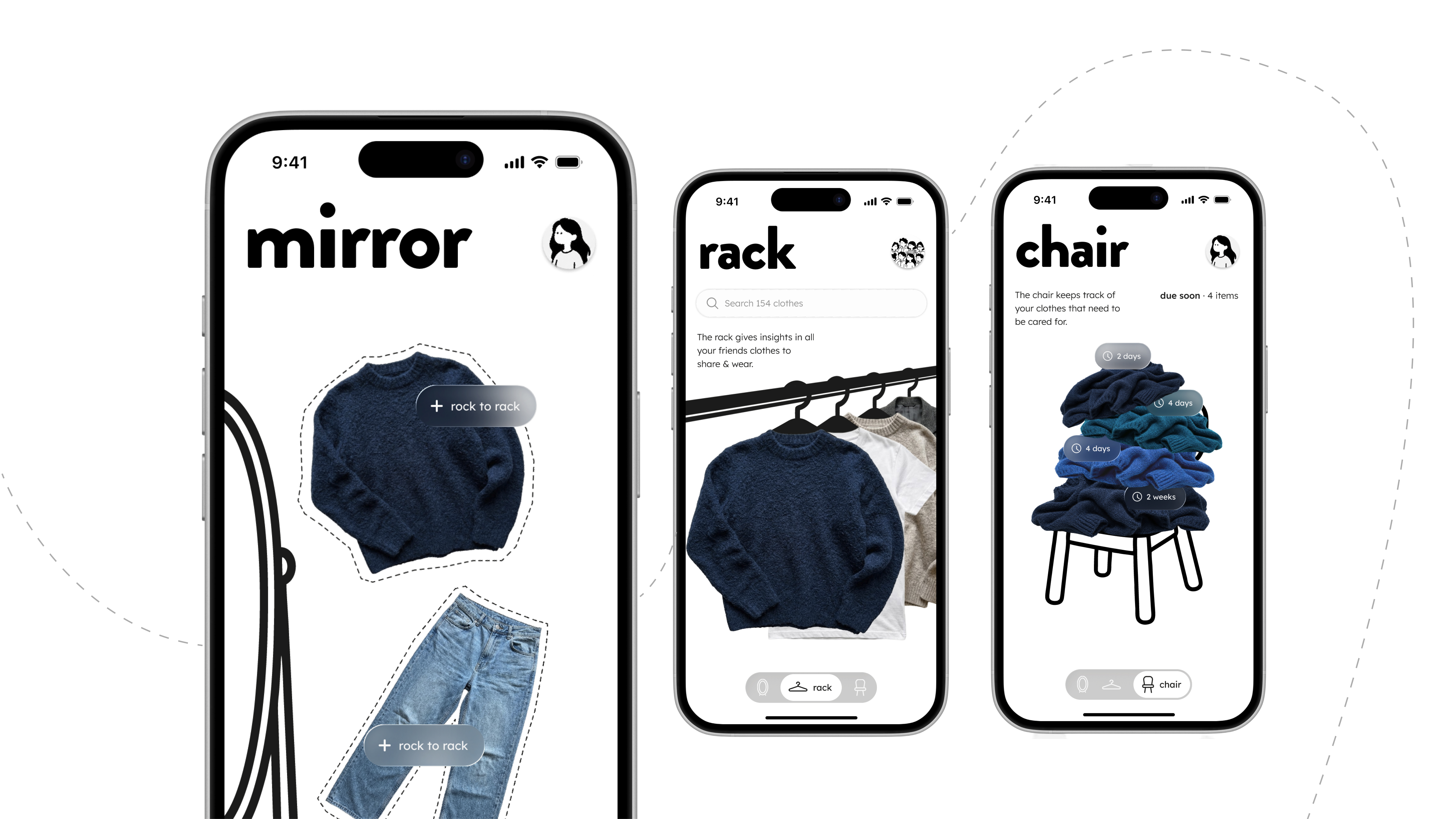
Prozessgestaltung 1
Flick dich - a clothing repair brand
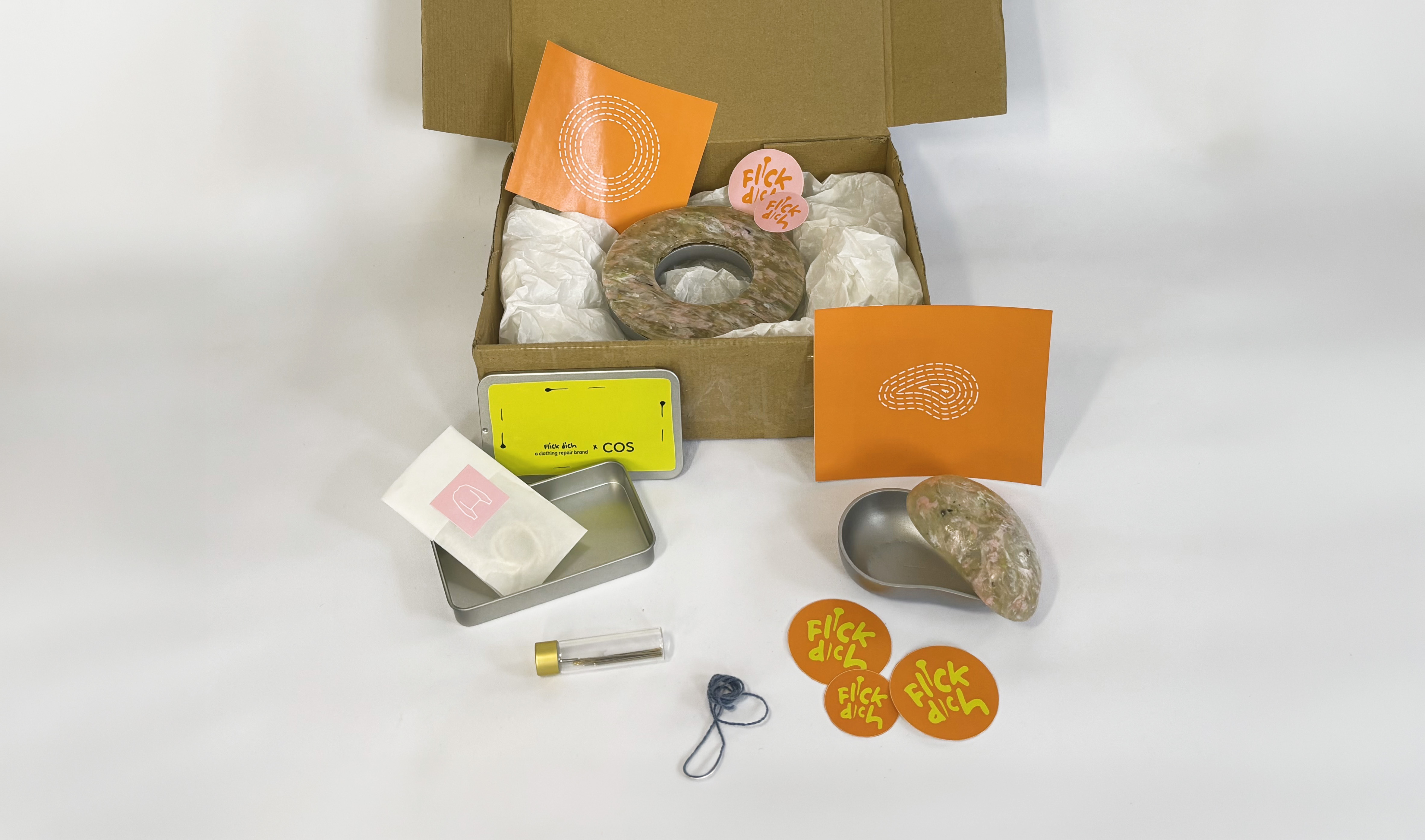
Flick Dich is a garment repair system for fashion retail, using COS as a case study to demonstrate how the concept could be implemented.
Customers who spend above the minimum order value receive a complimentary tin filled with garment-specific repair materials, including matching thread, yarn, and patches.
The system consists of three components: a physical repair kit, a website/app offering tutorials as well as repair tracking, and a supply chain that produces and delivers the kits through the retailer’s existing logistics network.
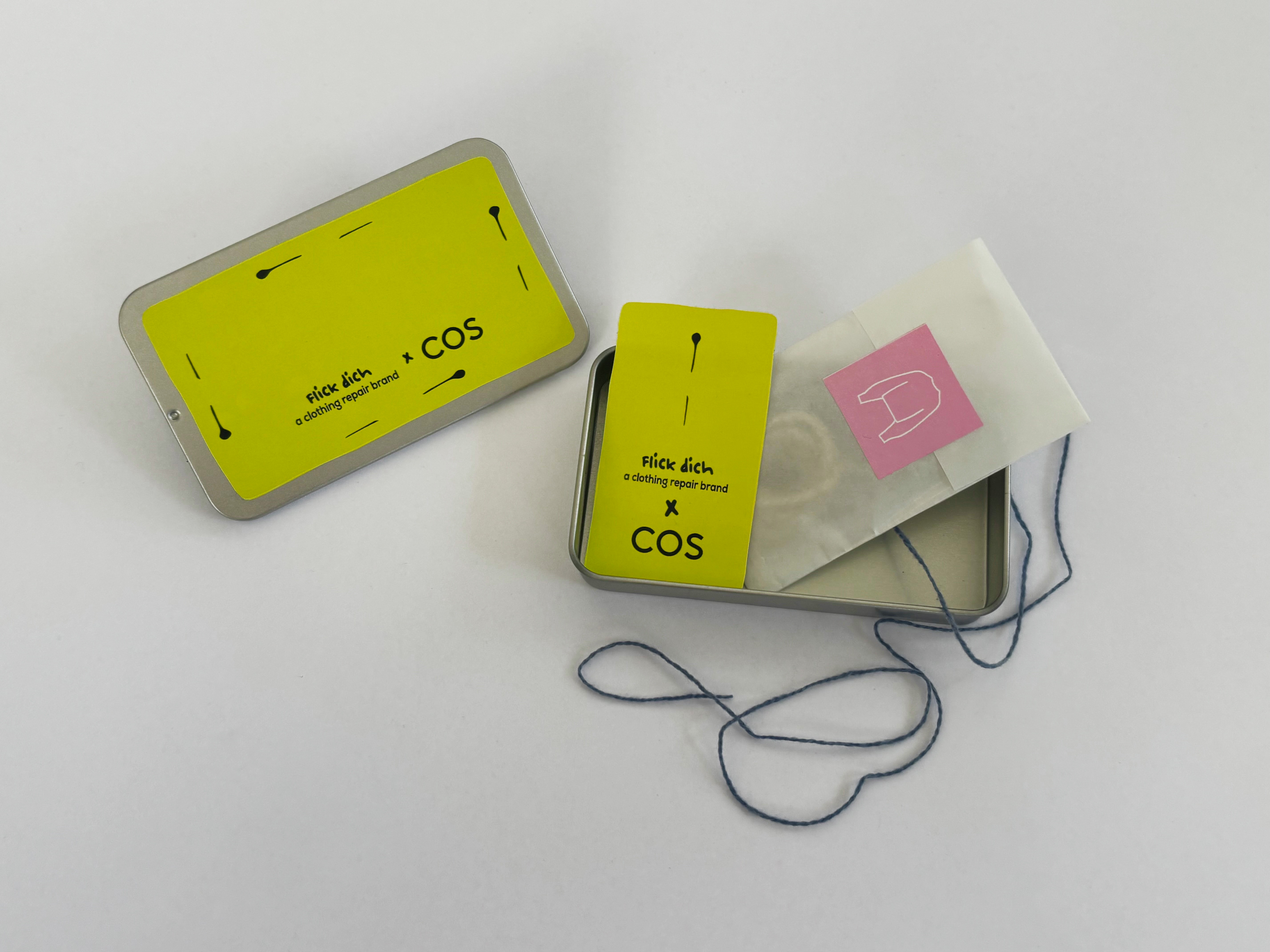
The tin contains a paper envelope tailored to each garment. Each envelope includes the materials needed for future repairs, such as matching thread, darning yarn, spare buttons, or fabric patches. It is labeled with a simple illustration of the garment, making it easy to identify its contents at a glance. Over time, the tin becomes a personal archive of repair materials with every qualifying purchase.
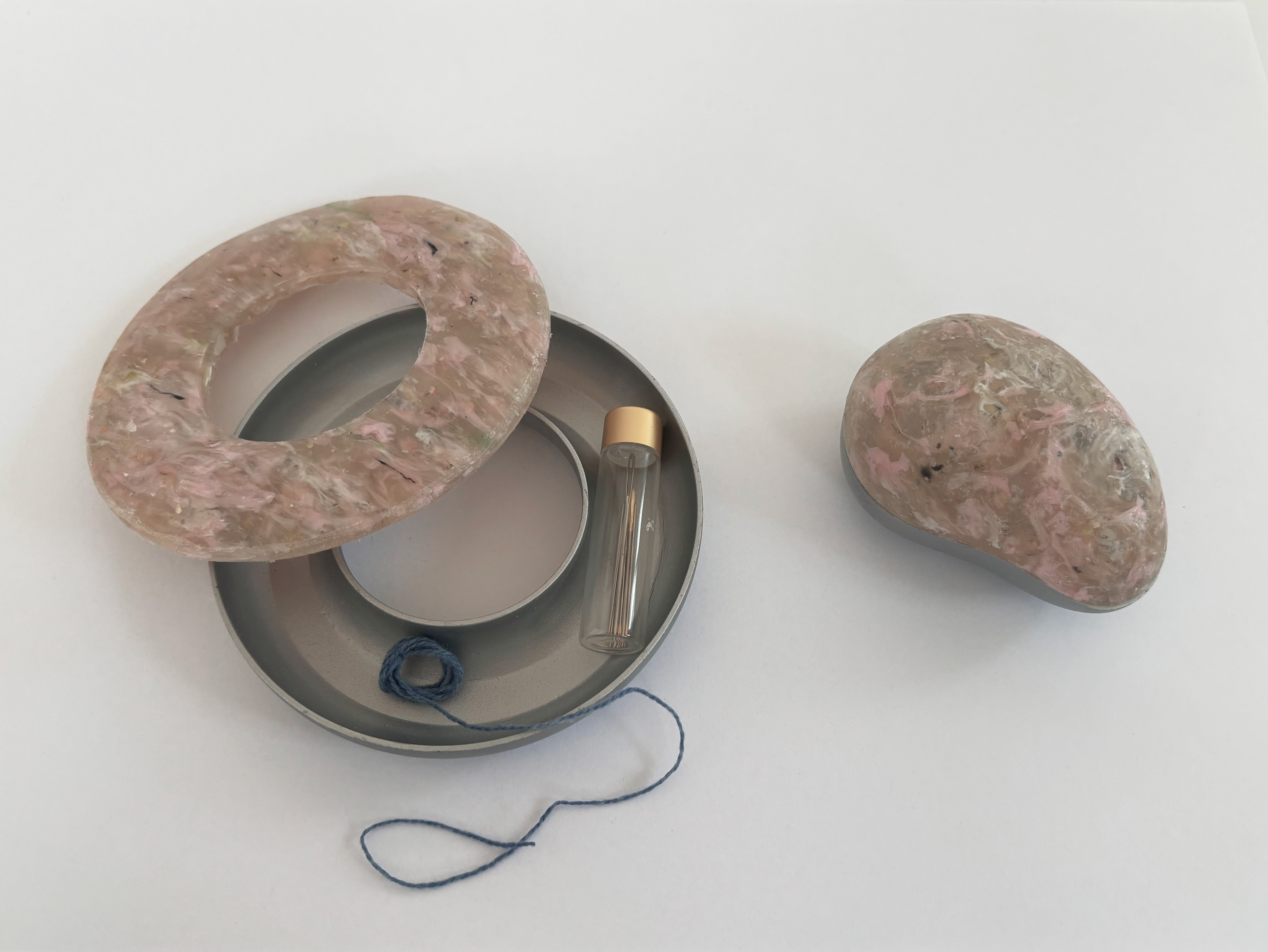
Kit for wool and knitwear, and the Patching Kit for cotton, linen, and denim. Each kit contains the tools needed for its specific repair technique and features an aluminum base with a recycled plastic lid. As the recycled plastic varies in color and pattern with every production batch, every kit is unique, making it both a functional tool and a collectible object
(Bild)
Each tin contains a business card with a QR code linking to the Flick Dich website. There, customers can access repair tutorials tailored to their garments, log completed repairs in a personal diary, keep track of their repair kits, and discover local repair workshops. The platform transforms a one-time purchase into an ongoing repair journey, encouraging customers to return, build repair skills, and become part of the Flick Dich movement.
Svenja Kirst, Maria Zagaria, Eva Dibbert
BetreuungProf. Leif Huff, Prof. Dr. Susanne Schade
Tags