Pflege, Wartung und Reparatur als Designpraxis
Der Kurs Prozessgestaltung beschäftigt sich mit der Gestaltung von Abläufen und Produktsystemen, die den Gebrauch von Produkten und Dienstleistungen bestimmen.
Pflege, Wartung und Reparatur als Designpraxis
Der Projektkurs untersuchte den Prozess der Pflege, Wartung und Reparatur als zentrales Ziel im Kontext von Gestaltung für Nachhaltigkeit und Circular Economy. Im Fokus standen nicht einzelne Produkte, sondern Prozesse, Strategien und Systeme, die eine langfristige Nutzung ermöglichen und Ressourcen im Kreislauf halten. Aufbauend auf qualitativer Recherche, Human-Centered-Design-Methoden und systemischer Analyse entwickelten die Studierenden prozessorientierte Konzepte, die traditionelle Praktiken neu interpretieren, Gleichteile zur Ressourcenschonung einsetzen, Materialien aus bestehenden Kreisläufen weiterdenken und Nutzer:innen dazu befähigen, Produkte besser zu verstehen, zu warten und selbst zu reparieren. Die entstandenen Arbeiten zeigen Gestaltung als aktiven Beitrag zu langlebigen, zirkulären Nutzungssystemen.
Care, Maintenance, and Repair as a Design Practice
This project course explored the process of care, maintenance, and repair as key goals within the context of designing for sustainability and the circular economy. Rather than focusing on individual repairable products, the course addressed the processes, strategies, and systems that enable long-term use and keep resources in circulation. Through qualitative research, human-centered design methods, and systems thinking, students developed process-oriented concepts that reinterpret traditional practices, employ standardized components to reduce resource consumption, give new meaning and applications to materials from existing material cycles, and enable users to better understand, maintain, and repair products themselves. The resulting projects demonstrate design as an active contribution to long-lasting, circular systems of use
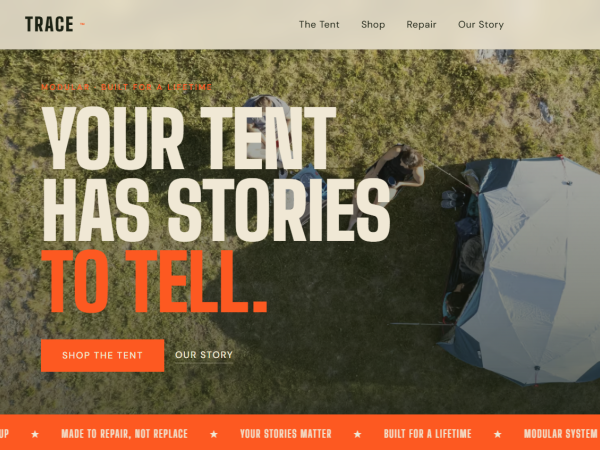
Trace is a system designed to extend the lifespan of a camping tent through two complementary components: a Repair Kit and a website.
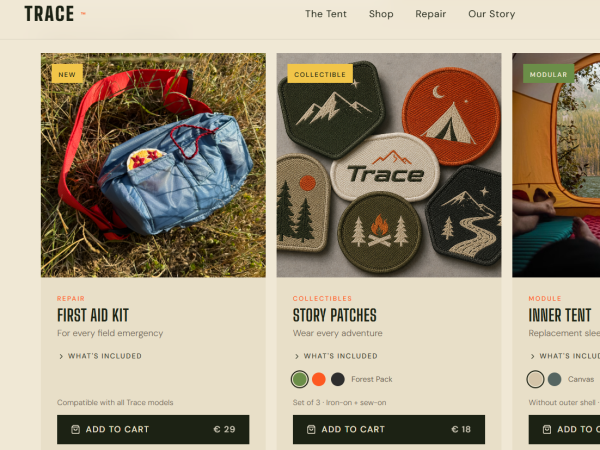
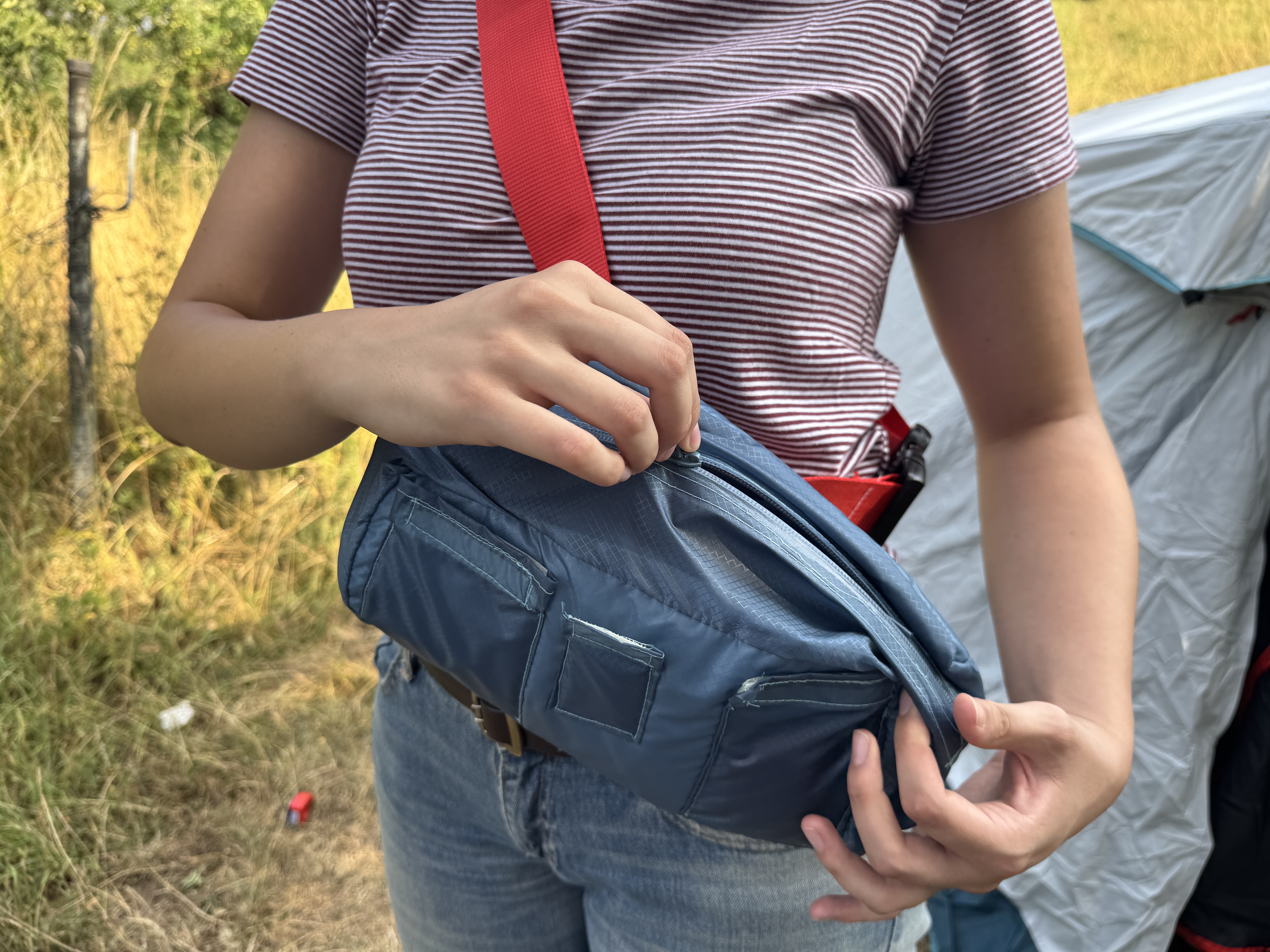
The Repair Kit works as a first-aid kit for the tent, providing the essential tools and spare parts needed to perform quick repairs while camping. It is made from the material of retired tents, giving them a second life instead of ending up as waste. This extends the material’s life cycle and gives it a new, meaningful purpose.
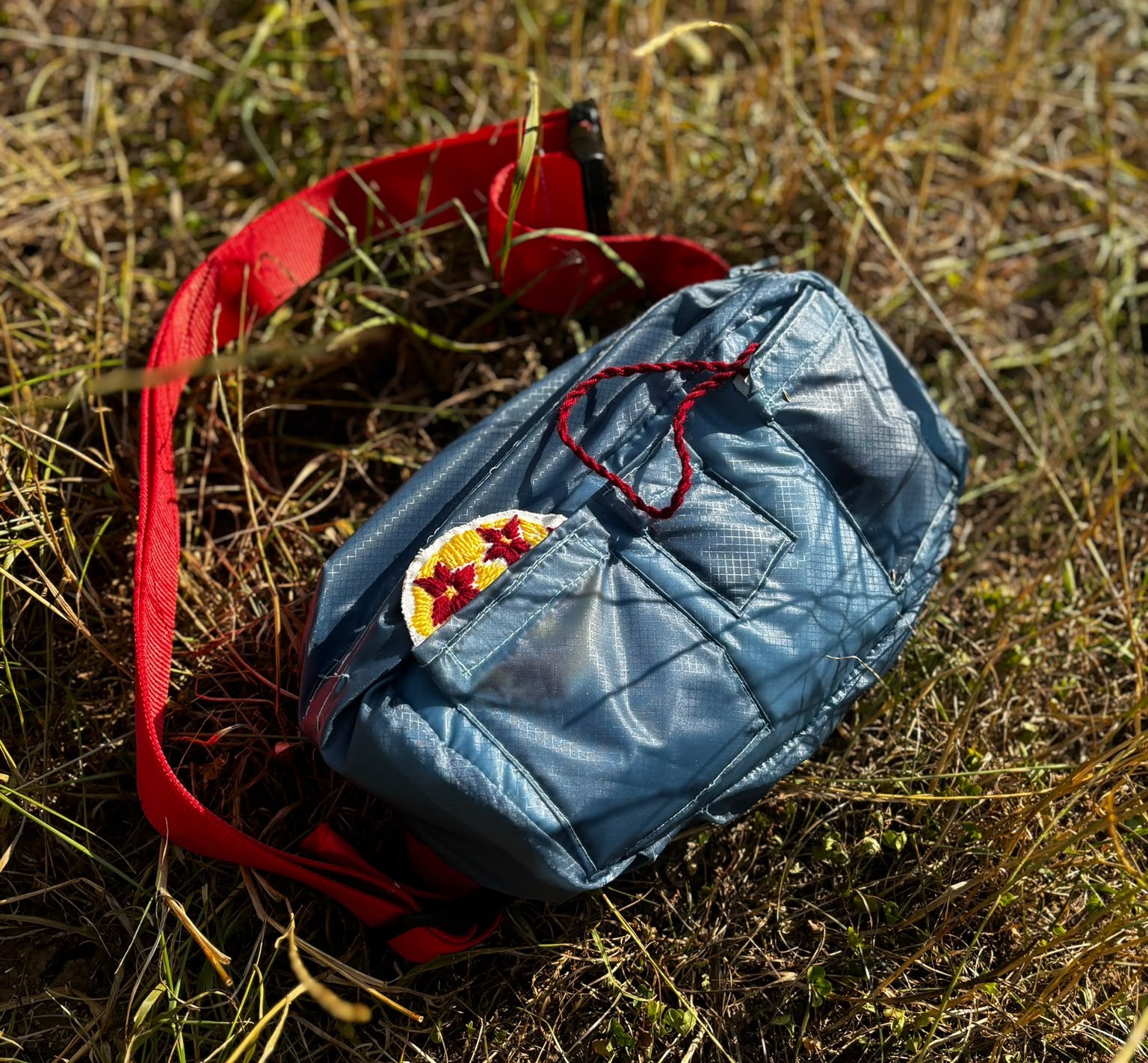
It includes patches for sealing small holes, cord for the tent structure, safety pins for temporary zipper repairs, and tape for general-purpose repairs. The kit also serves as the tent‘s closure. During use, it can also be fastened around the body to provide a more comfortable and practical user experience.
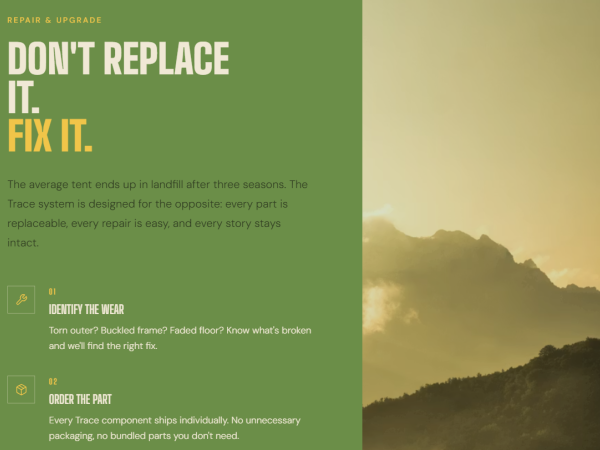
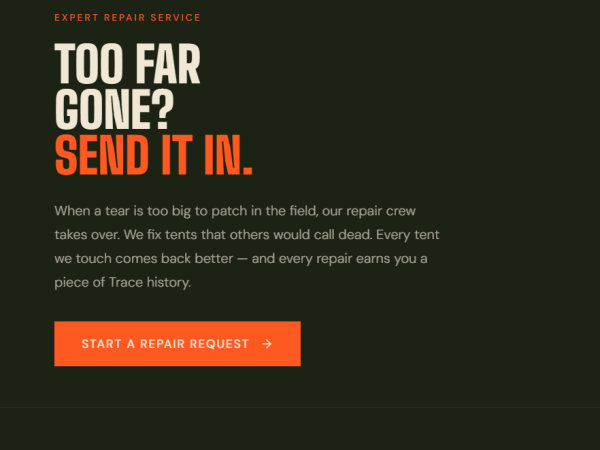
The website allows users to purchase individual replacement parts instead of replacing the entire tent. It offers a repair service, enabling damaged components that the user cannot fix themselves, to be sent back, repaired, and reused.
Together, these two components make repairing the tent simple and accessible, encouraging users to maintain and repair their products rather than discard them, ultimately extending the tent‘s lifespan.
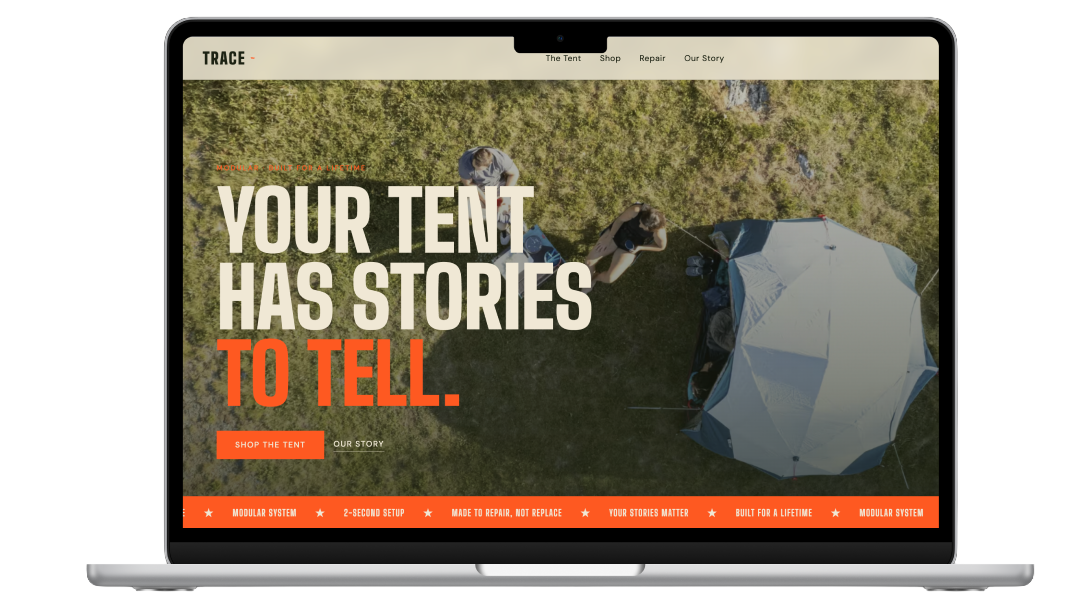
Our website serves as a community platform for tent enthusiasts. After each repair, users receive a patch that represents how long their tent has been in use and the experiences it has been through. In this way, every tent tells its own story. Community members can share their adventures and experiences, connect with one another, and become part of a growing community.