Dreidimensionales Gestalten 2
light clay / lamp
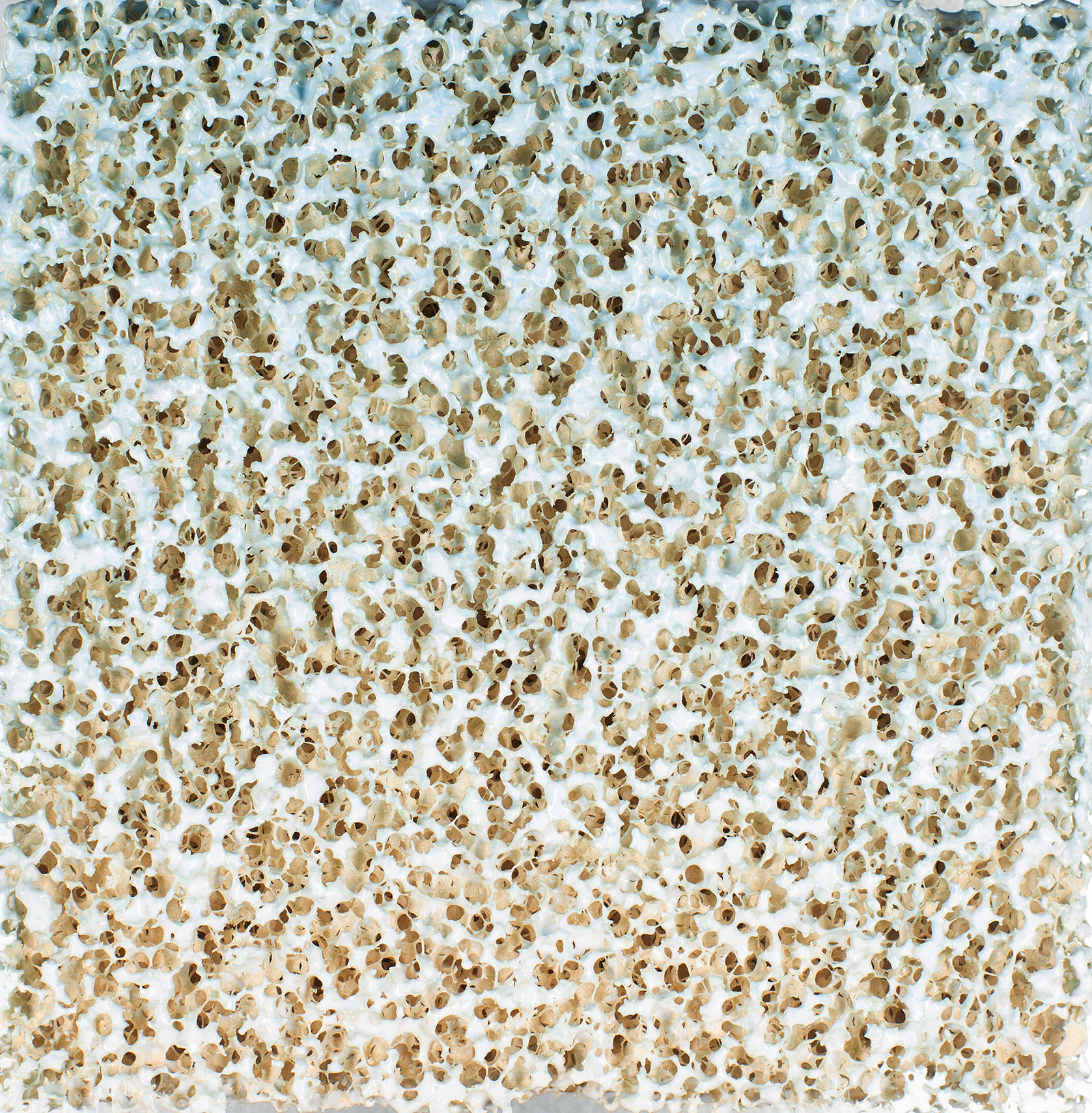
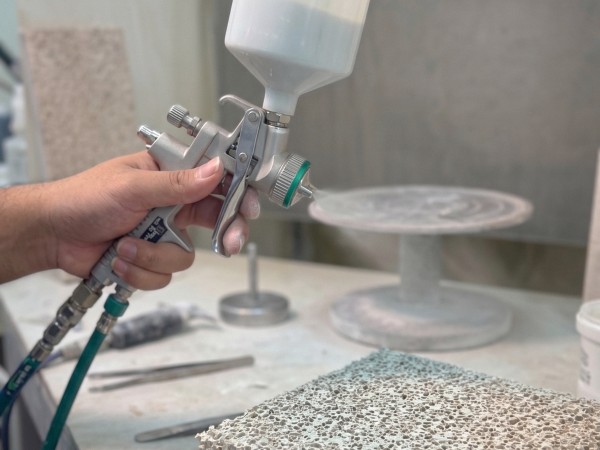
Our material connects the attribute “light” in a double meaning with clay : light in weight and light-transmitting. The surface is porous with countless openings. These cavities remove the mass of the heavy clay and let light pass through, making the fired clay appear airy, and almost weightless. For color, the sample is coated with a sprayed glaze gradient from sky blue to white, further emphasizing its light appearance.
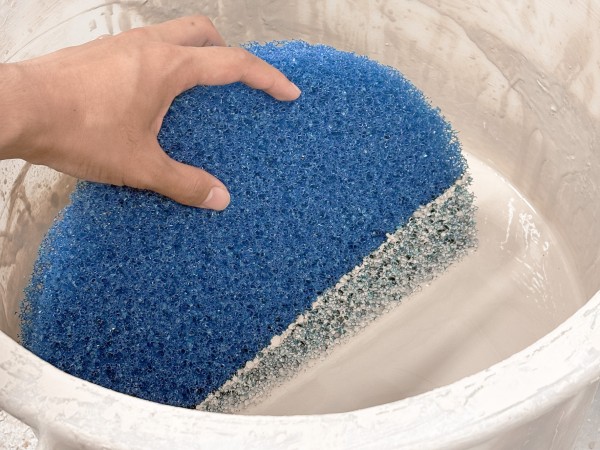
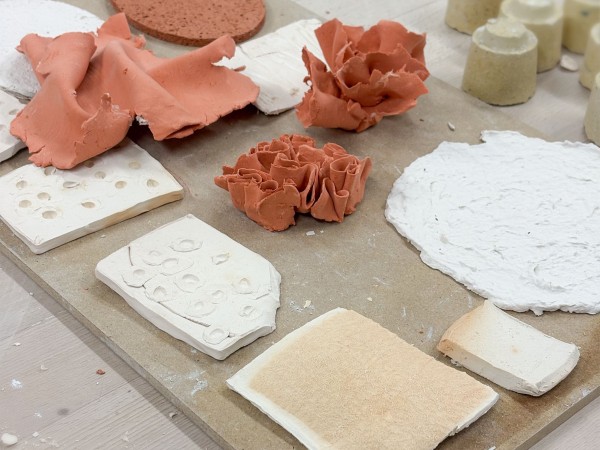
Starting from light and clay, we experimented with enclosing popcorn inside clay, rolling out paperclay, and testing fiberglass. The decisive approach emerged from soaking various sponges in casting slip. After drying and firing, the sponge burns away completely, leaving only the hardened clay that precisely replicates the porous structure of the sponge.
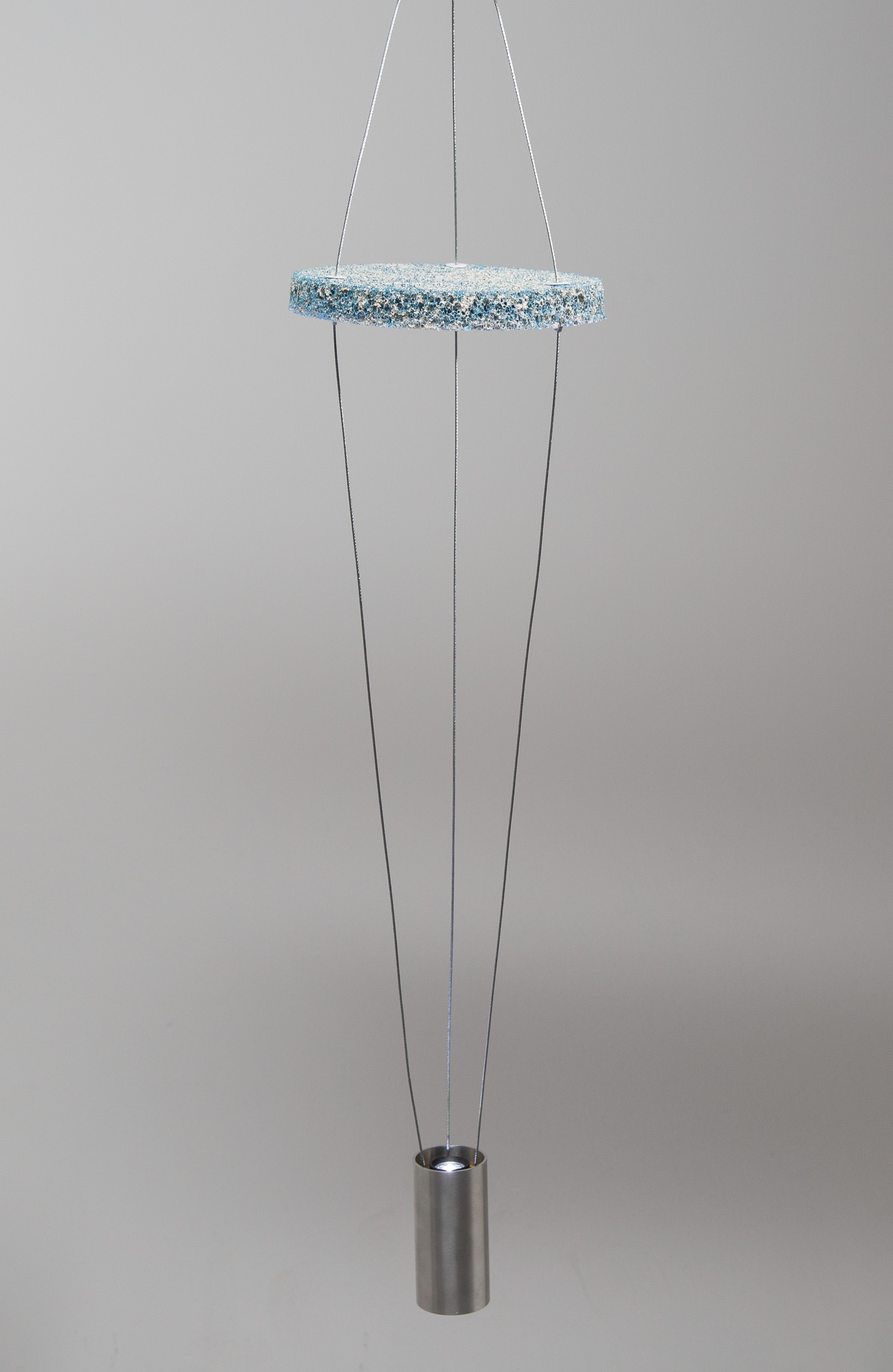
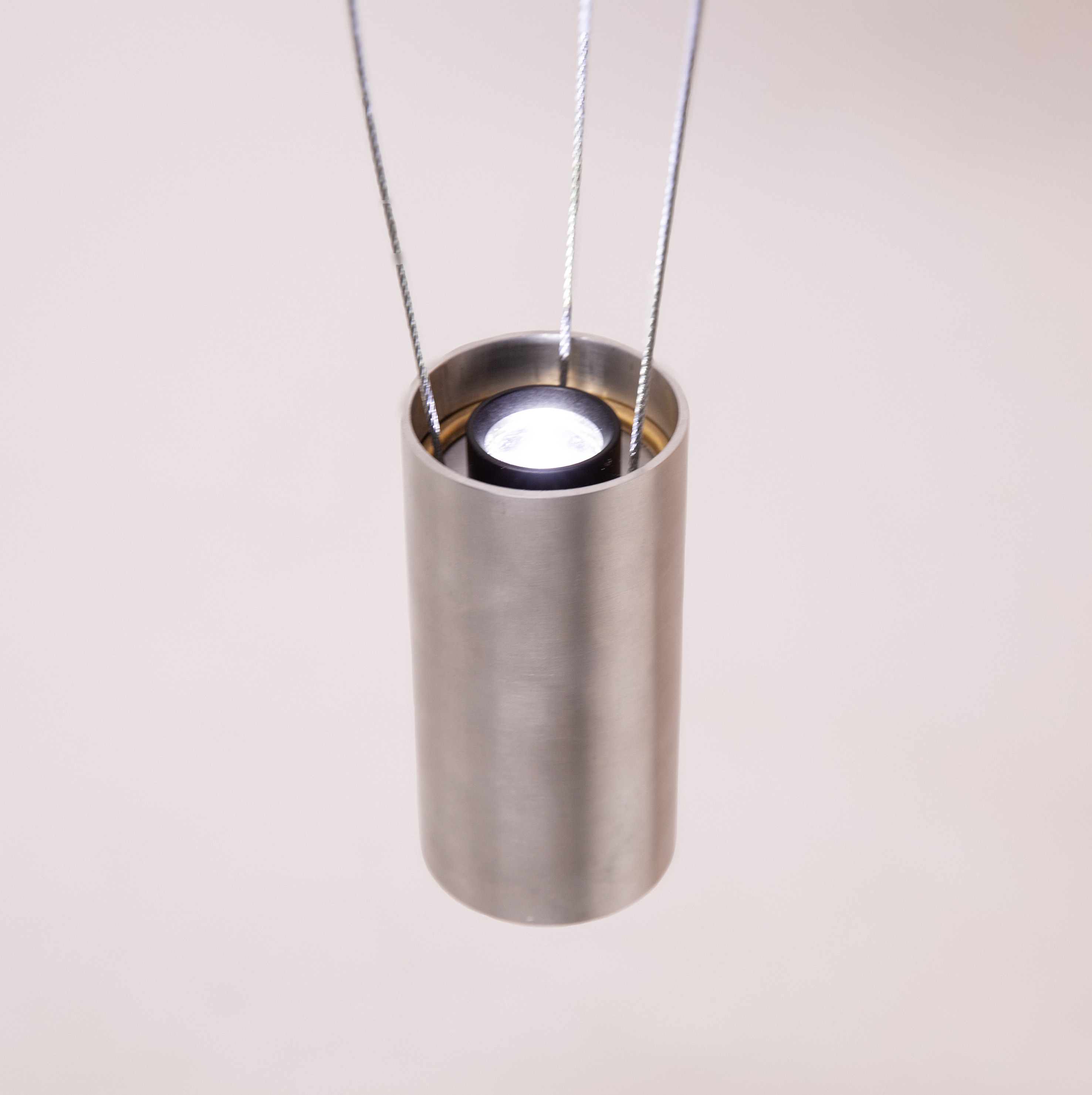
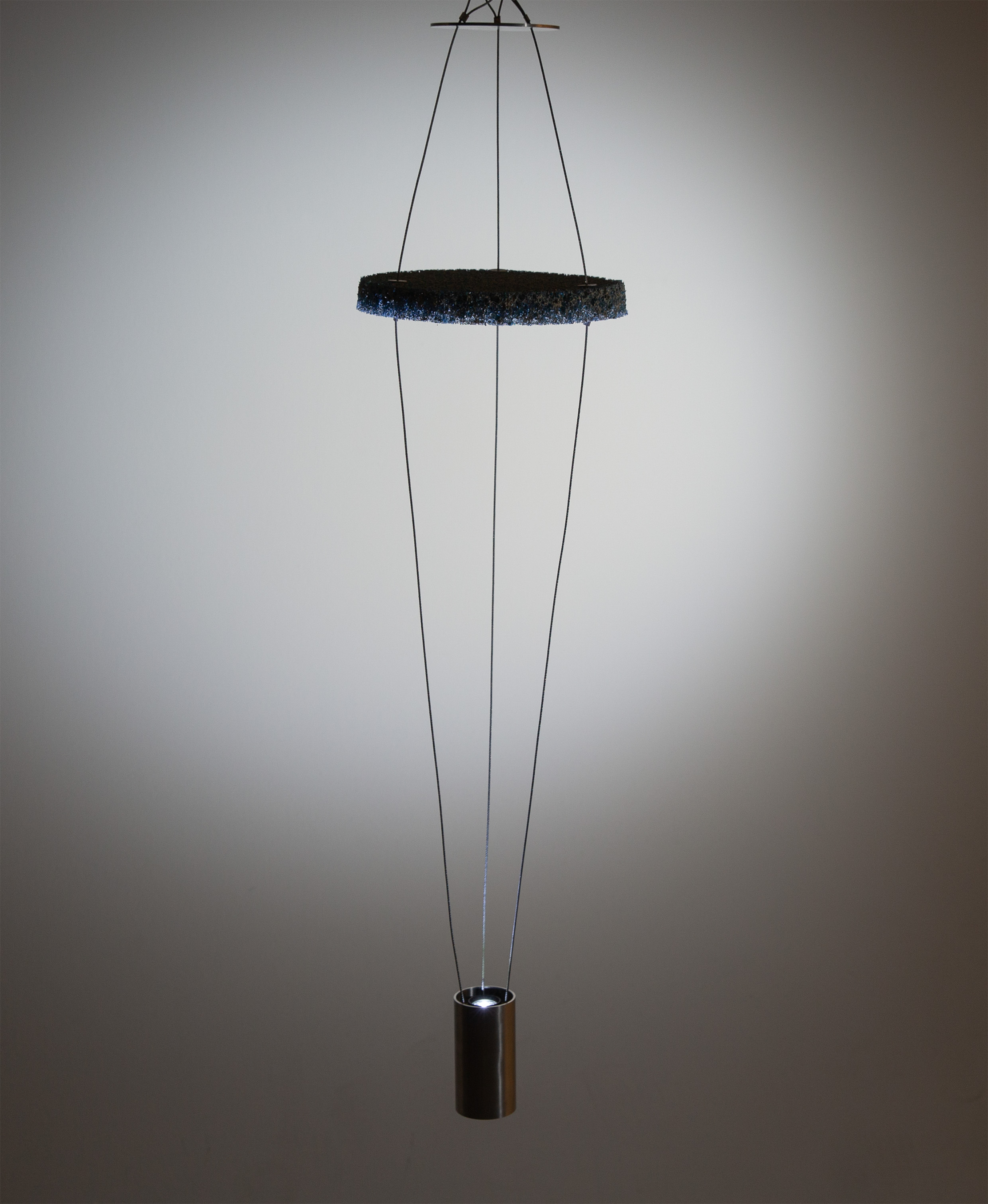
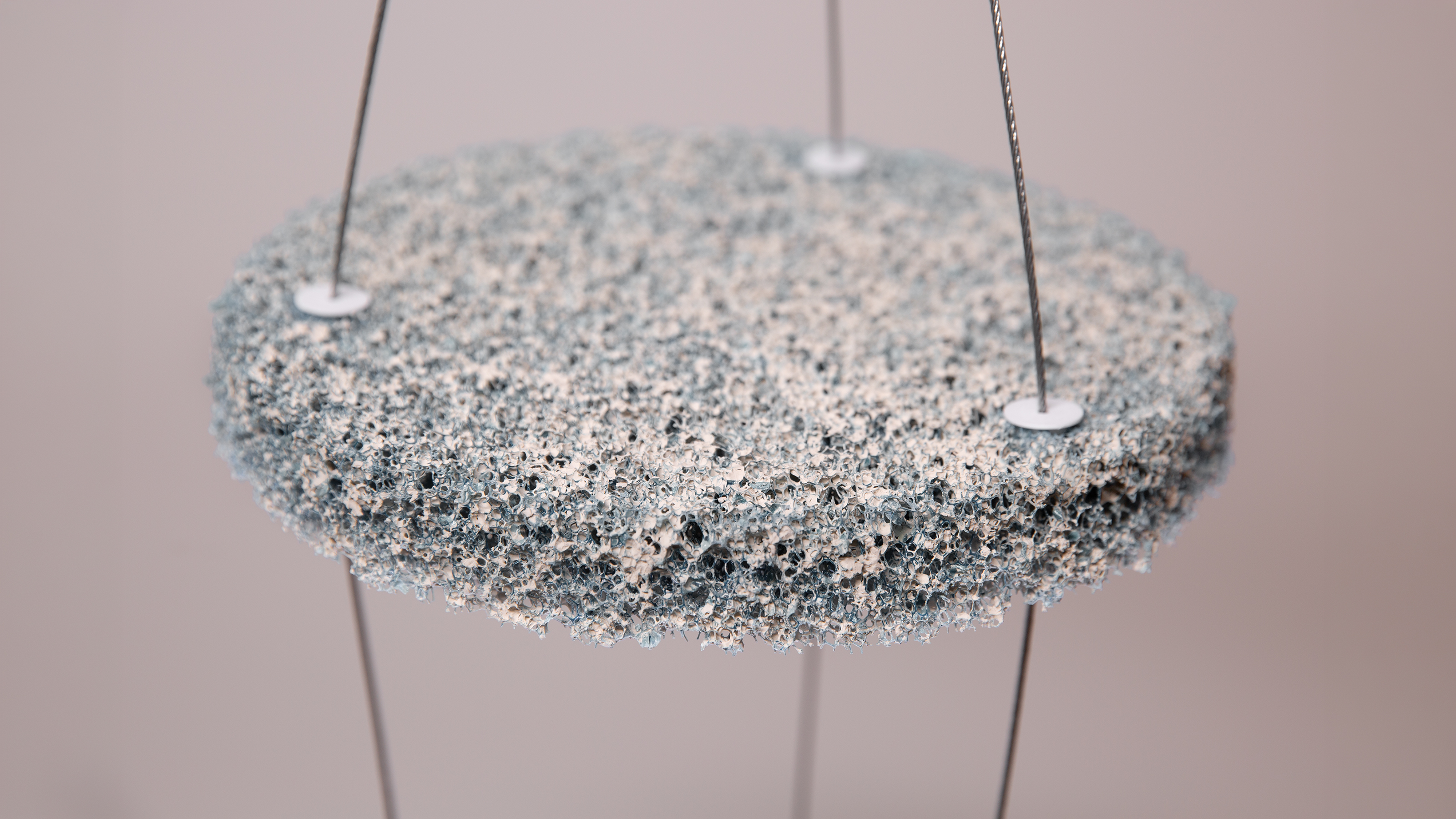
Our product is a hanging lamp that places the material at the center of attention. The porous clay disc floats in the middle, held only by thin metal wires, while a small suspended light source illuminates it from underneath.
The material inspired the product in two ways. First, its porous structure allows light to shine through the cavities, turning the illuminated clay into the heart of the lamp. Second, hanging the disc from delicate metal threads makes its lightness. Thus, the lamp demonstrates both meanings of “light” at once : luminosity and weightlessness