Dreidimensionales Gestalten 2
aggressive animal based / rain jacket
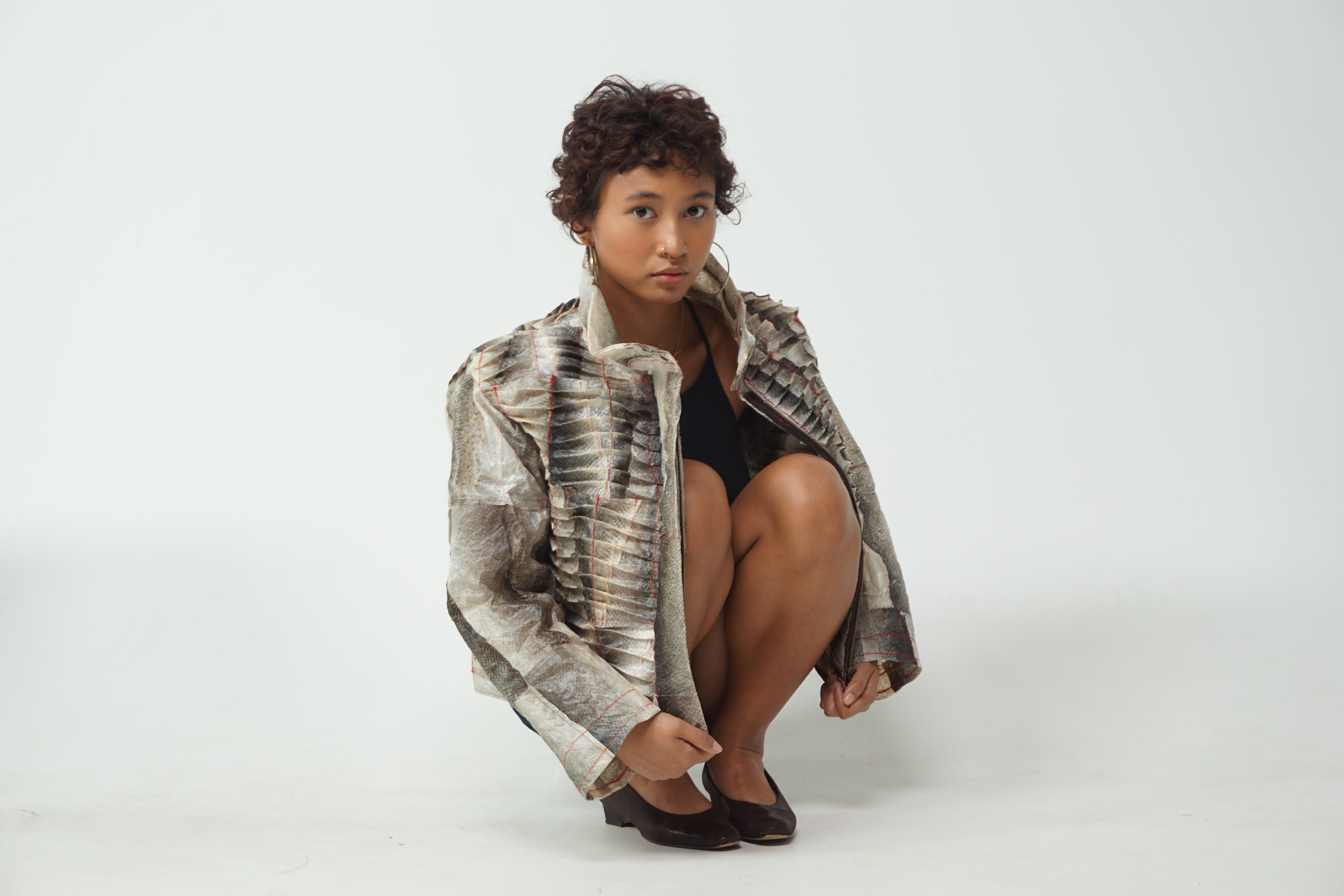
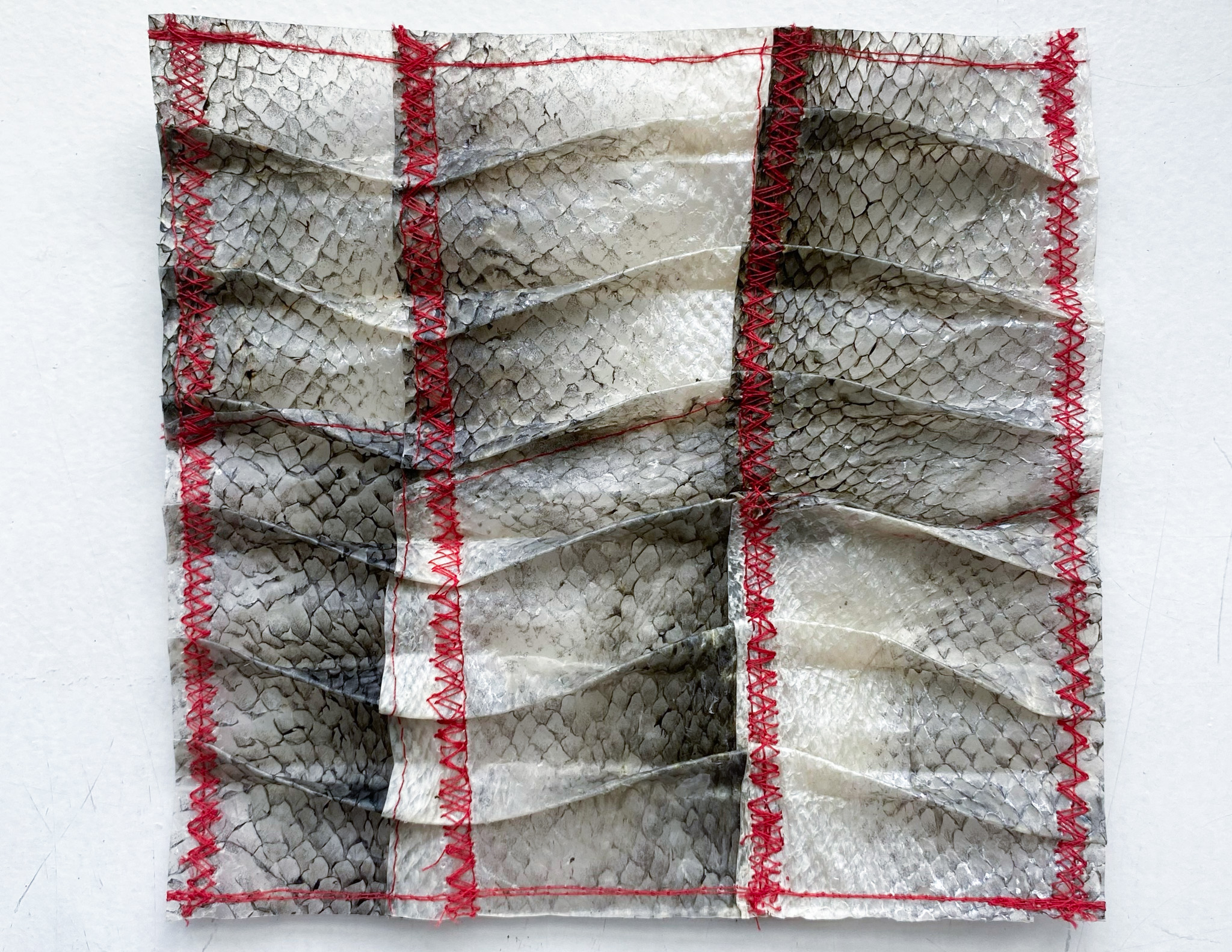
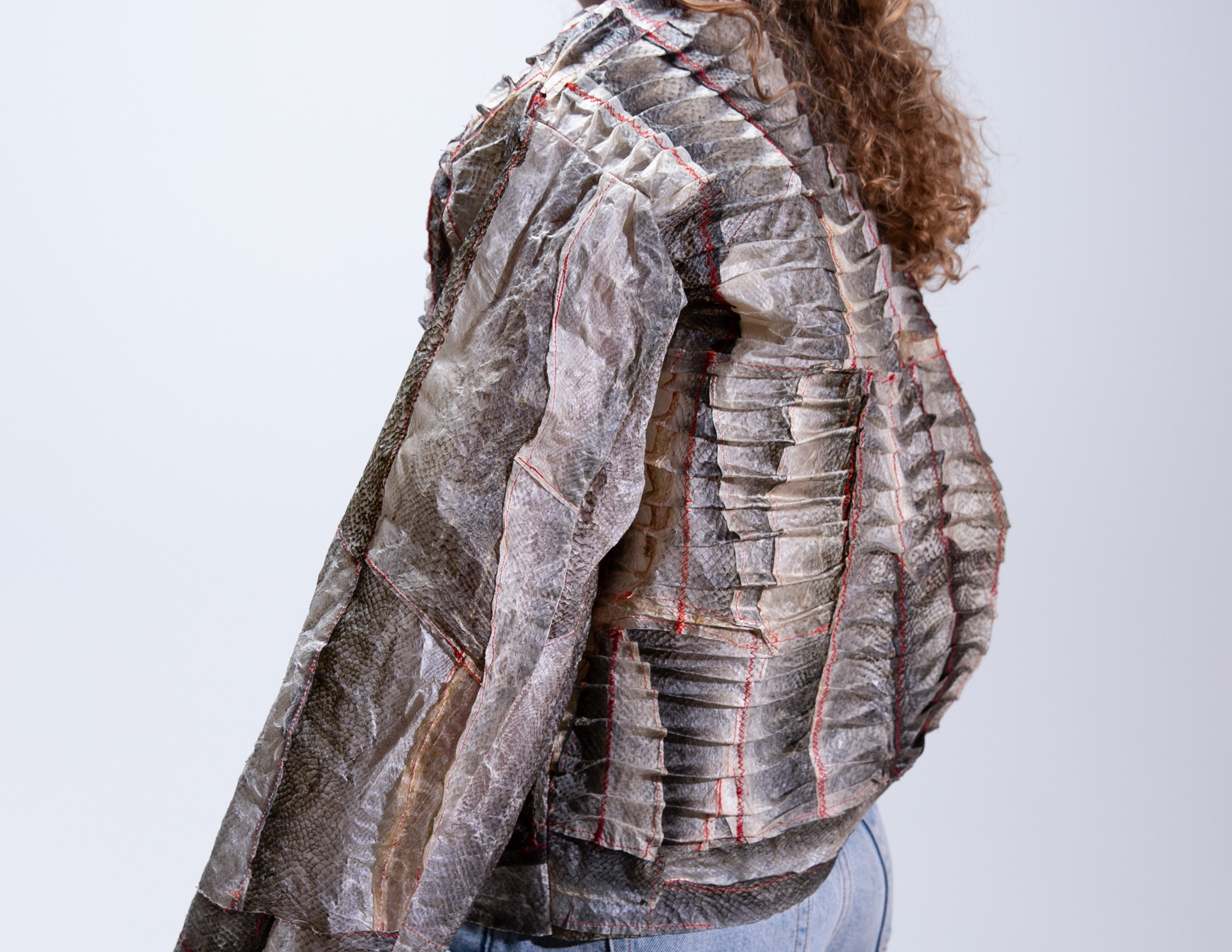
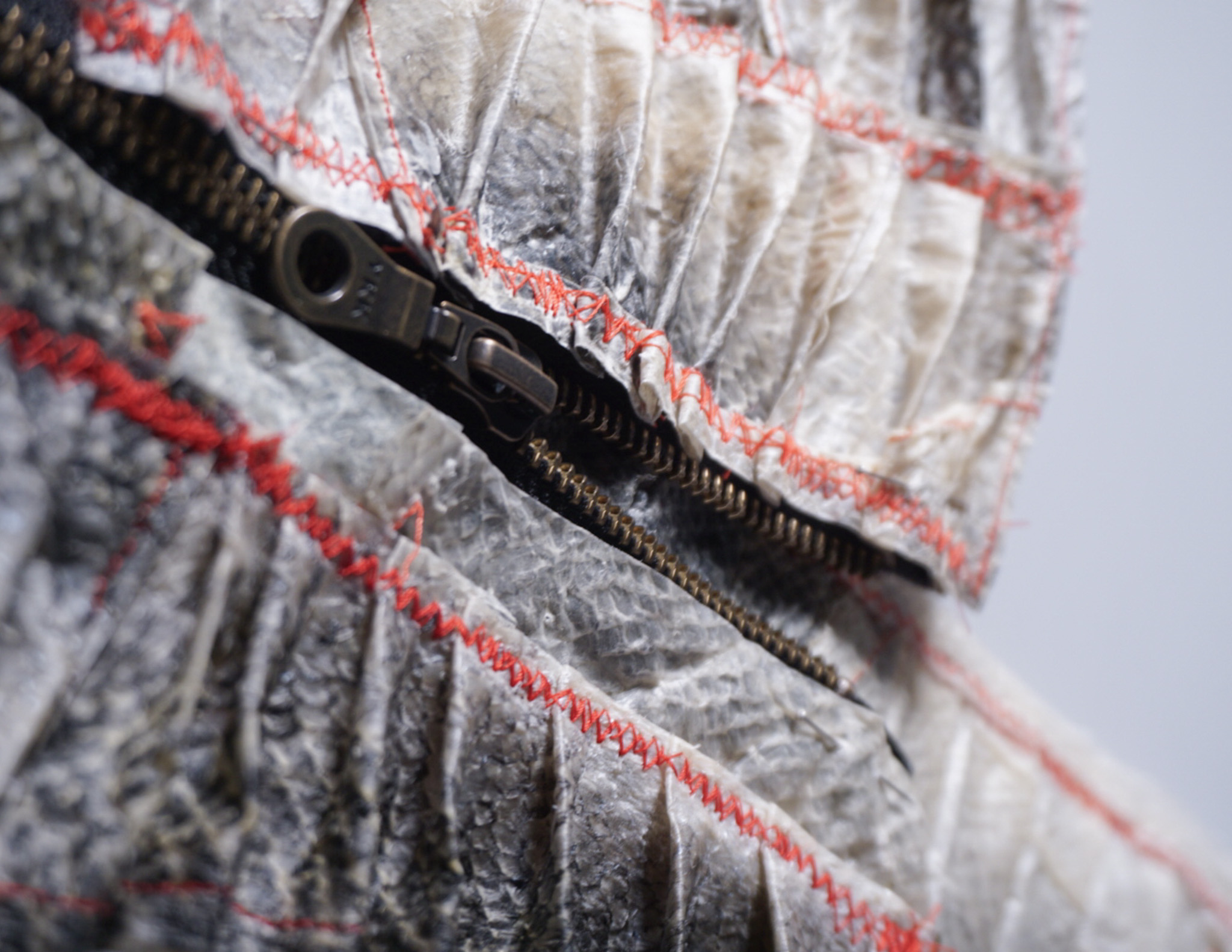
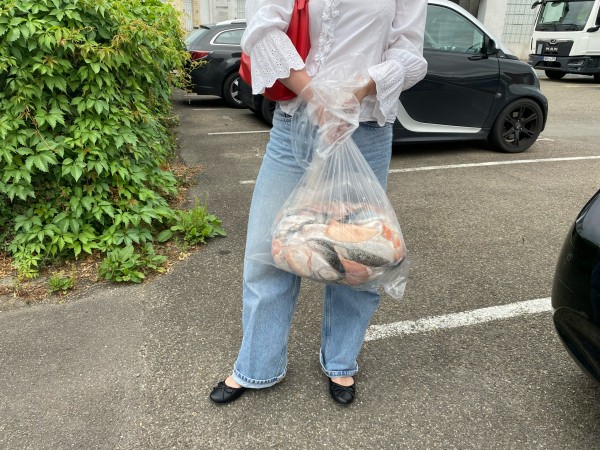
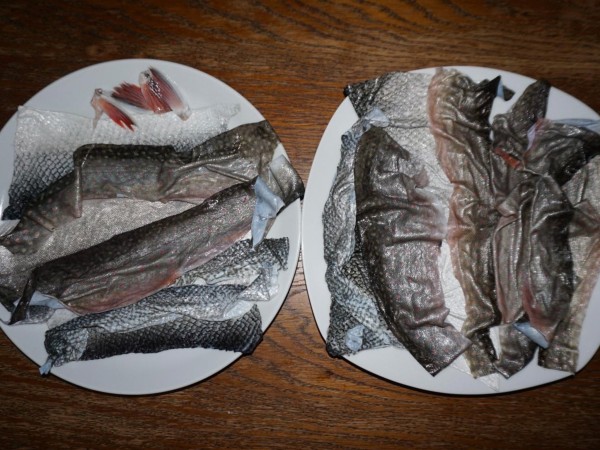
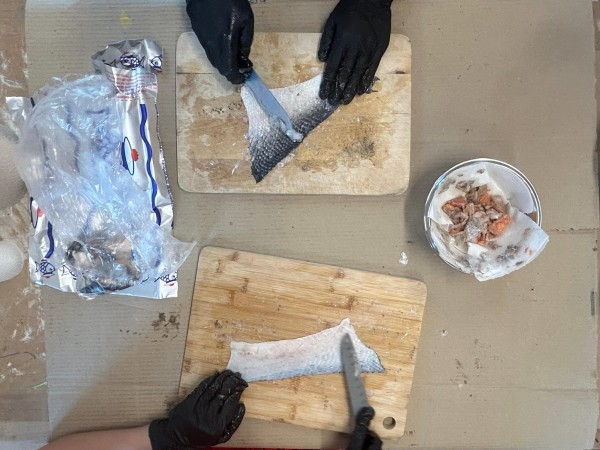
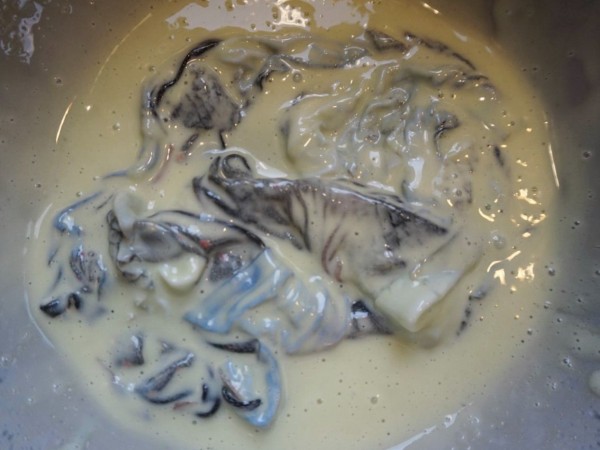
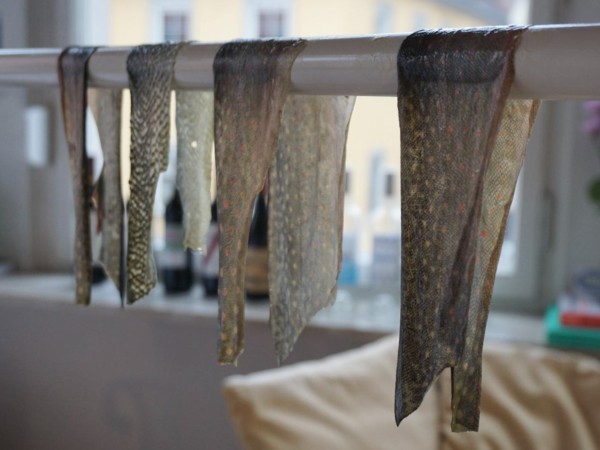
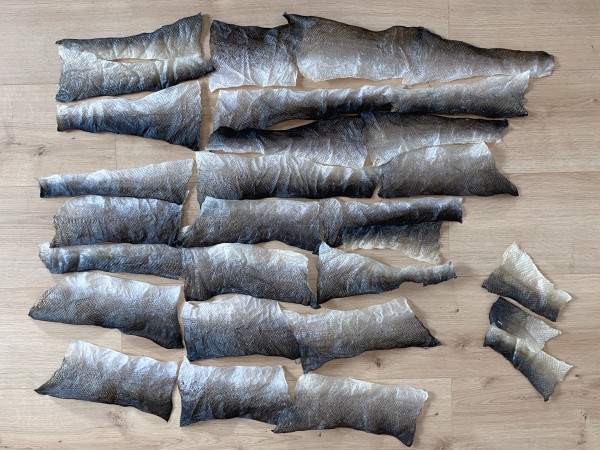
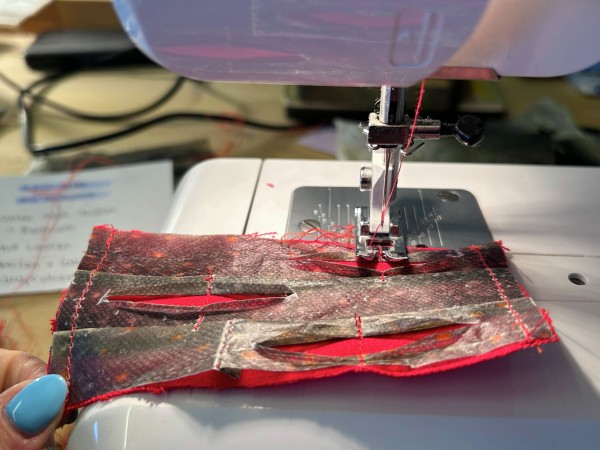
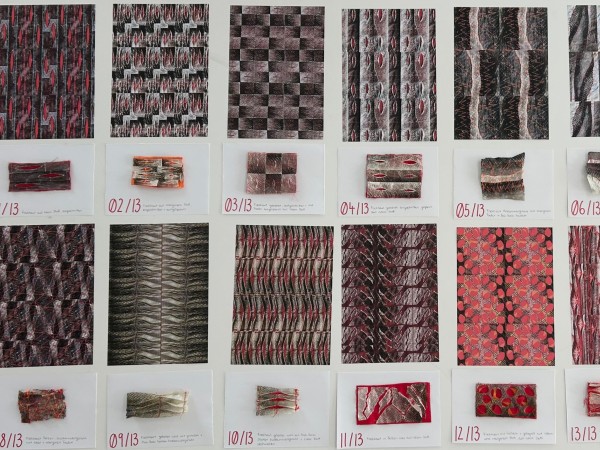
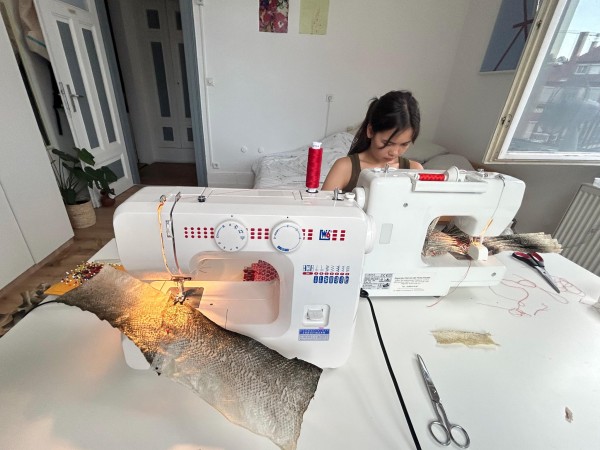
After a lot of research and several experiments in our assigned Animal Based material category, we found fish skin, which we then turned into fish leather. It was important to us to use an animal waste material. We got the fish skin as waste from fish sellers, helping to make sure that the whole fish is used. By folding the material and adding carefully placed seams, we created an aggressive look while also changing its material properties.
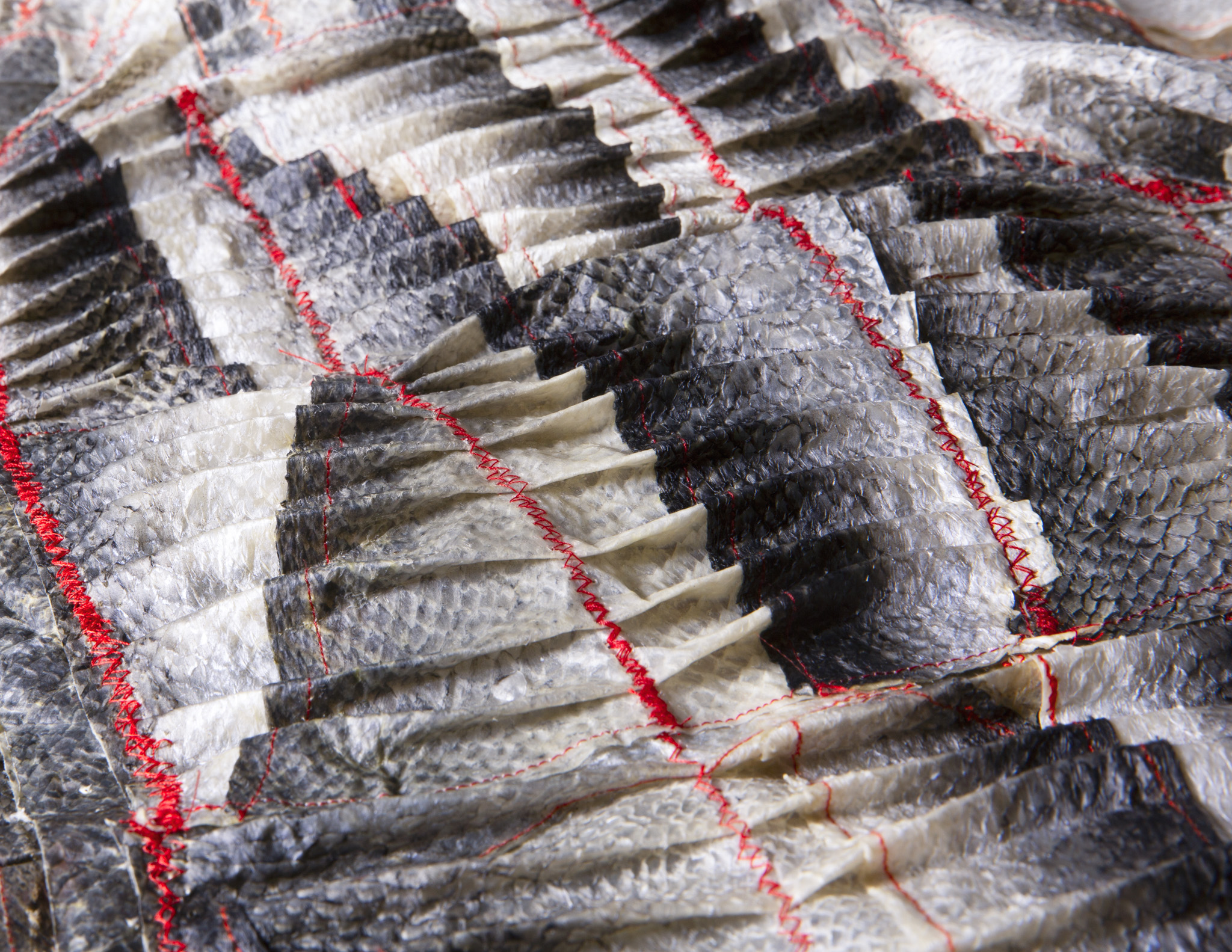
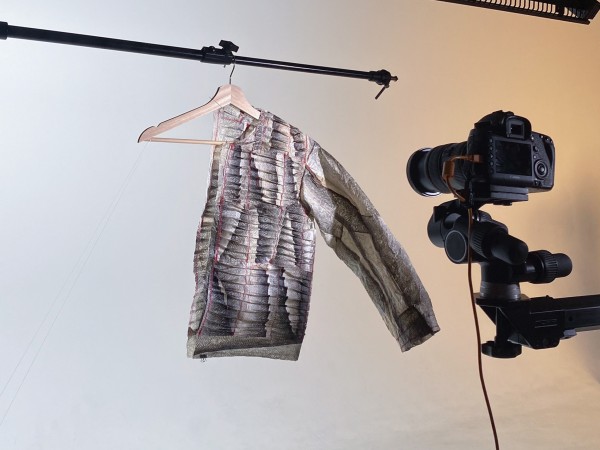
Fish leather is stronger and more tear-resistant than normal leather, but it is also very thin, almost transparent. It is naturally water-repellent as well.The folds make the material stiffer, and small slits under the folds allow air to pass through, making it breathable without reducing its water-repellent function. Because of these material properties, we decided to use fish leather for a rain jacket. The jacket is water-repellent, breathable, and sustainable.