Dreidimensionales Gestalten 2
Feuerschale

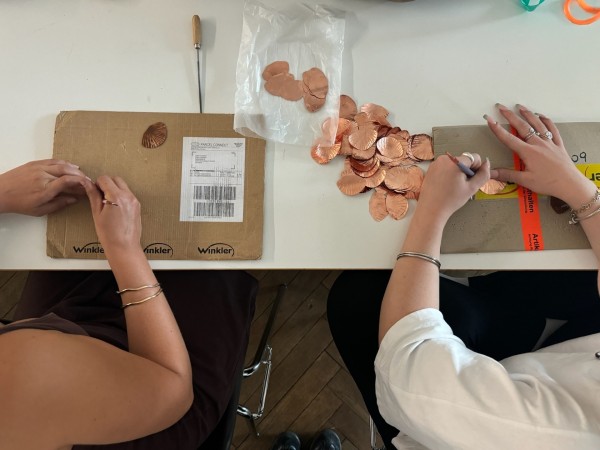
Aus dem Ziel, das Material Kupfer mit dem Begriff „animalistisch“ zu verschmelzen, entstand die Idee, kein starres Objekt, sondern eine beinahe lebendige Feuerschale zu kreieren.
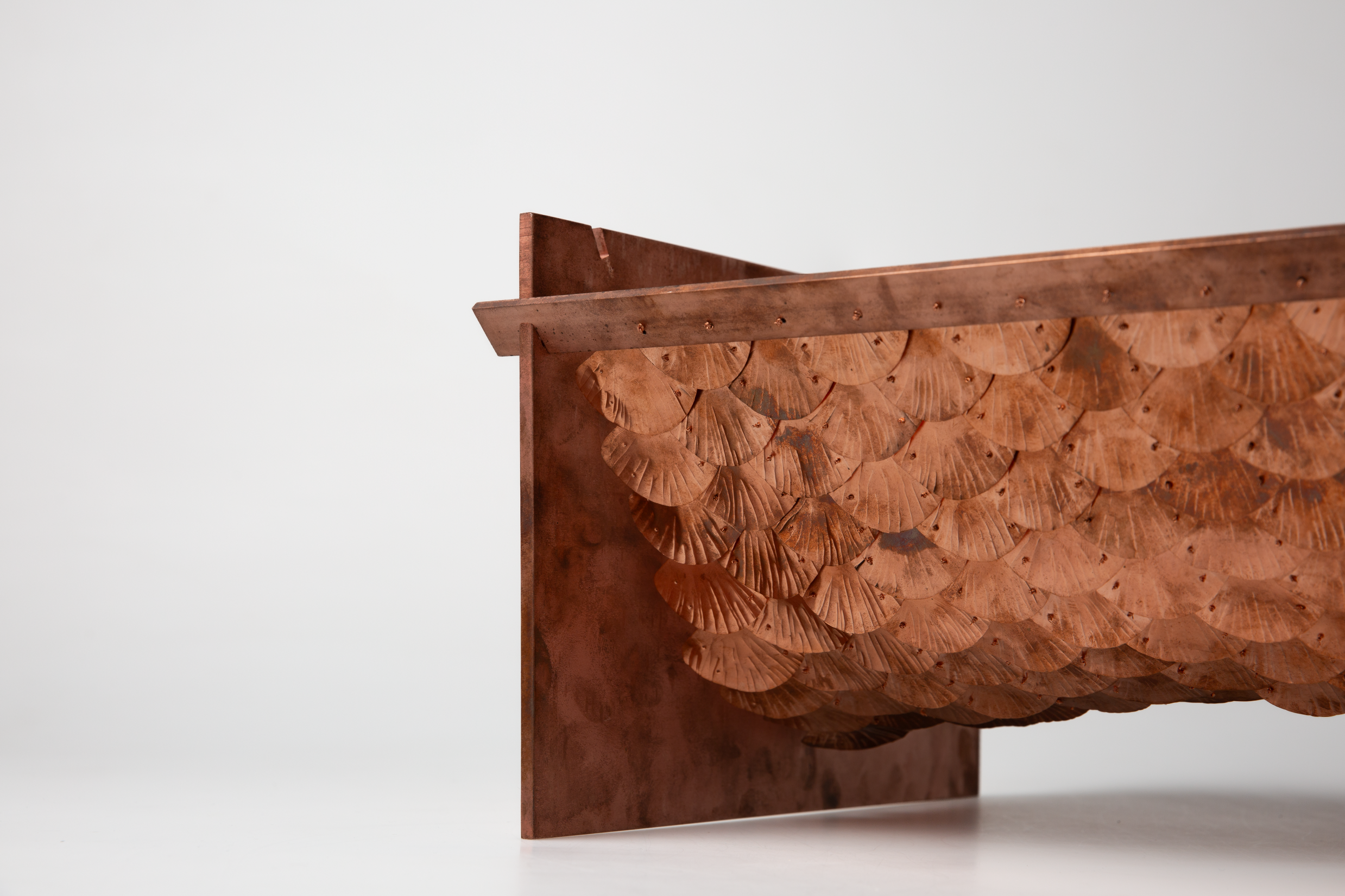
Kupfer eignet sich dafür ideal: Es ist nicht nur perfekt hitzebeständig, sondern bildet mit der Zeit eine Patina wodurch unser Material die Charakteristik der Alterung von Tieren widerspiegelt.

Durch die Schuppenstruktur hindurch schimmert das Licht des Lagerfeuers und gibt durch die Lücken wie auch durch die vorteilhafte Wärmeleitfähigkeit des Kupfers, Wärme in die bodennahe Umgebung ab.
Zudem ist die Konstruktion komprimierbar und das Schuppenmuster in sich beweglich. Man kann die Feuerschale einfach zusammenklappen, platzsparend mitnehmen und flexibel in Kerben unterschiedlicher Positionen einsetzen. So vereint unser Projekt organische Beweglichkeit mit absolut praktischer Funktion.