Pflege, Wartung und Reparatur als Designpraxis
Der Kurs Prozessgestaltung beschäftigt sich mit der Gestaltung von Abläufen und Produktsystemen, die den Gebrauch von Produkten und Dienstleistungen bestimmen.
Pflege, Wartung und Reparatur als Designpraxis
Der Projektkurs untersuchte den Prozess der Pflege, Wartung und Reparatur als zentrales Ziel im Kontext von Gestaltung für Nachhaltigkeit und Circular Economy. Im Fokus standen nicht einzelne Produkte, sondern Prozesse, Strategien und Systeme, die eine langfristige Nutzung ermöglichen und Ressourcen im Kreislauf halten. Aufbauend auf qualitativer Recherche, Human-Centered-Design-Methoden und systemischer Analyse entwickelten die Studierenden prozessorientierte Konzepte, die traditionelle Praktiken neu interpretieren, Gleichteile zur Ressourcenschonung einsetzen, Materialien aus bestehenden Kreisläufen weiterdenken und Nutzer:innen dazu befähigen, Produkte besser zu verstehen, zu warten und selbst zu reparieren. Die entstandenen Arbeiten zeigen Gestaltung als aktiven Beitrag zu langlebigen, zirkulären Nutzungssystemen.
Care, Maintenance, and Repair as a Design Practice
This project course explored the process of care, maintenance, and repair as key goals within the context of designing for sustainability and the circular economy. Rather than focusing on individual repairable products, the course addressed the processes, strategies, and systems that enable long-term use and keep resources in circulation. Through qualitative research, human-centered design methods, and systems thinking, students developed process-oriented concepts that reinterpret traditional practices, employ standardized components to reduce resource consumption, give new meaning and applications to materials from existing material cycles, and enable users to better understand, maintain, and repair products themselves. The resulting projects demonstrate design as an active contribution to long-lasting, circular systems of use
Industrial production often creates leftover materials that cannot be used for their original purpose.
These are not defective parts—they are high-quality components that may simply be too short, too long, or left over after production.
Although they are fully functional, they are usually sent directly to the recycling process.
Our challenge was therefore not to make recycling better. Instead, we asked a different question:
How can we use these industrial leftovers before they are recycled?
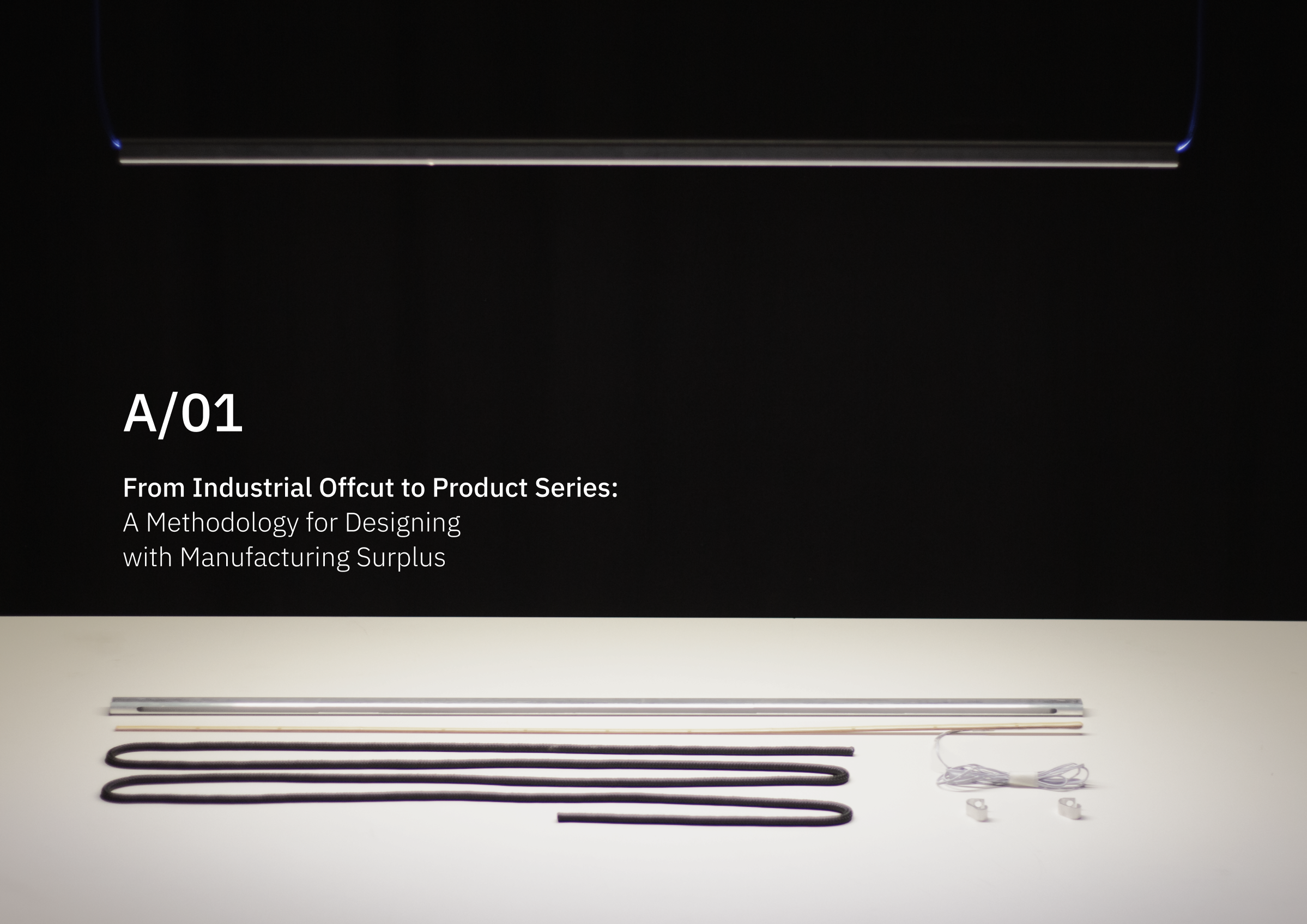
Rather than designing a single product, we developed a design
process that transforms existing industrial surplus into new products with as little additional manufacturing as possible.
The lamp is only the first example of how this process can work.