Dreidimensionales Gestalten 2
artificial - plastics
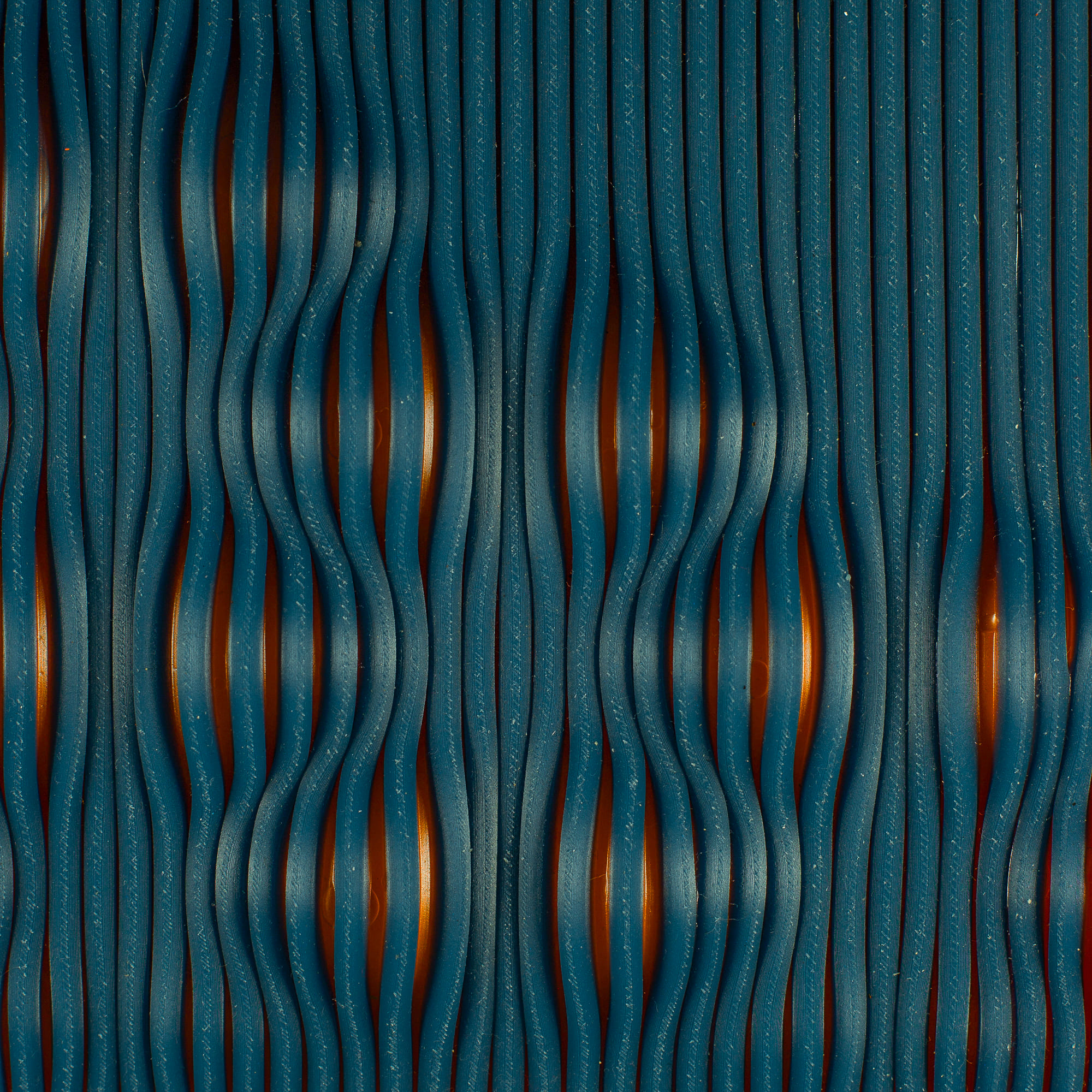
artificial
plastics
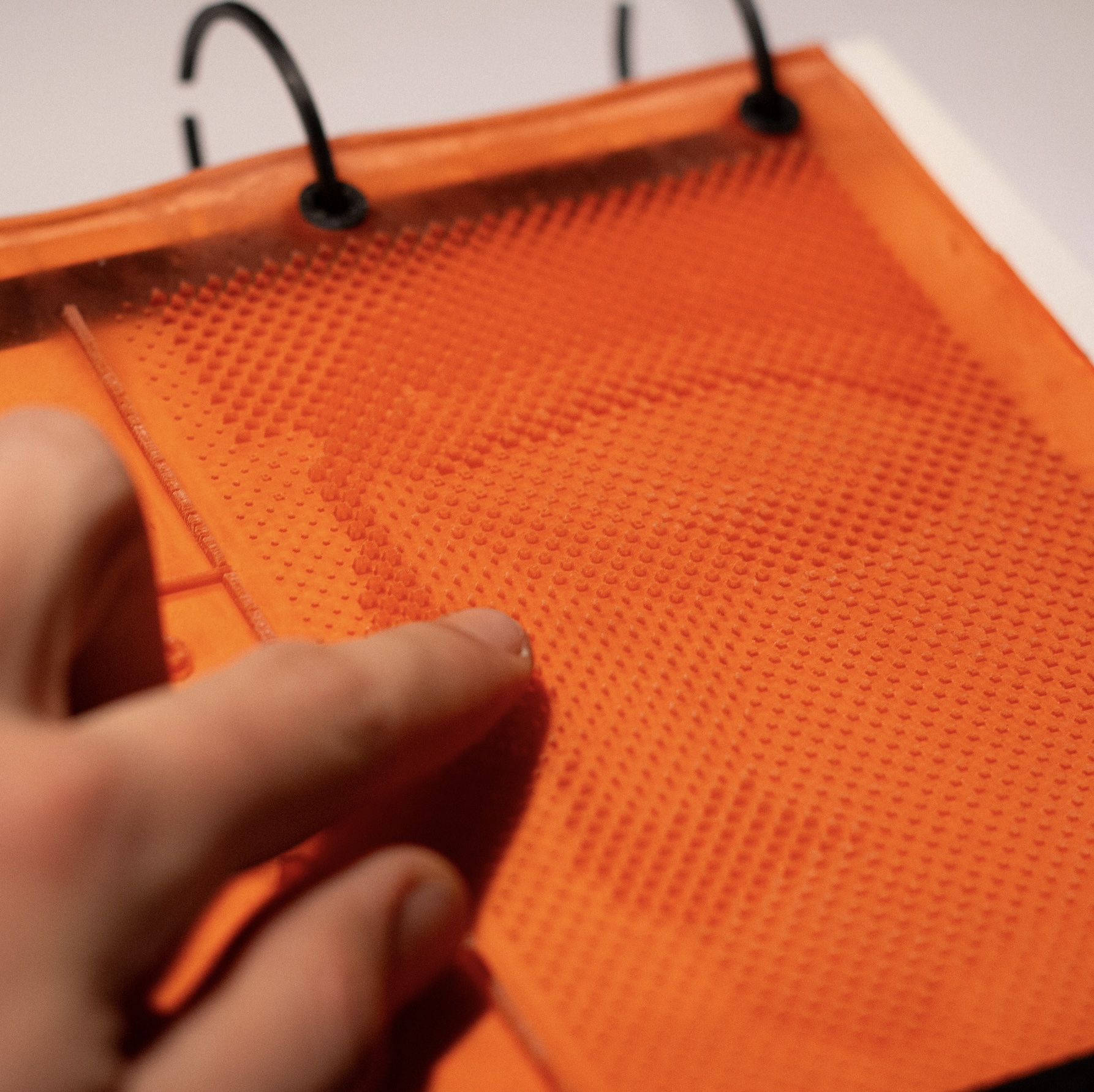
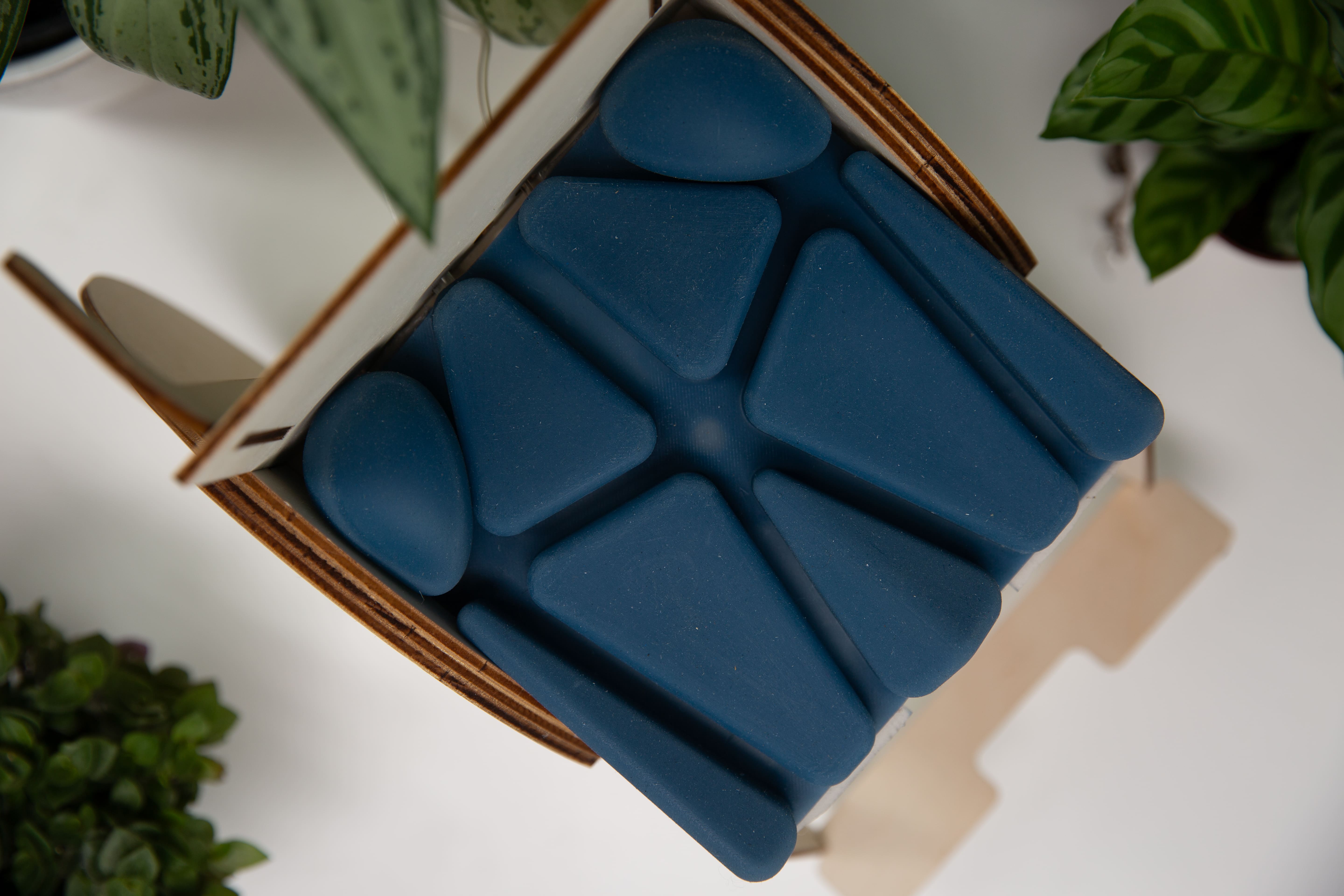
In our material sample, we focused on the effect of artificially keeping something alive. To achieve this, we equipped the material sample with air chambers that can be controlled individually. Inflating a chamber reveals the orange layer, which, in combination with the blue top layer, reinforces the artificial impression.
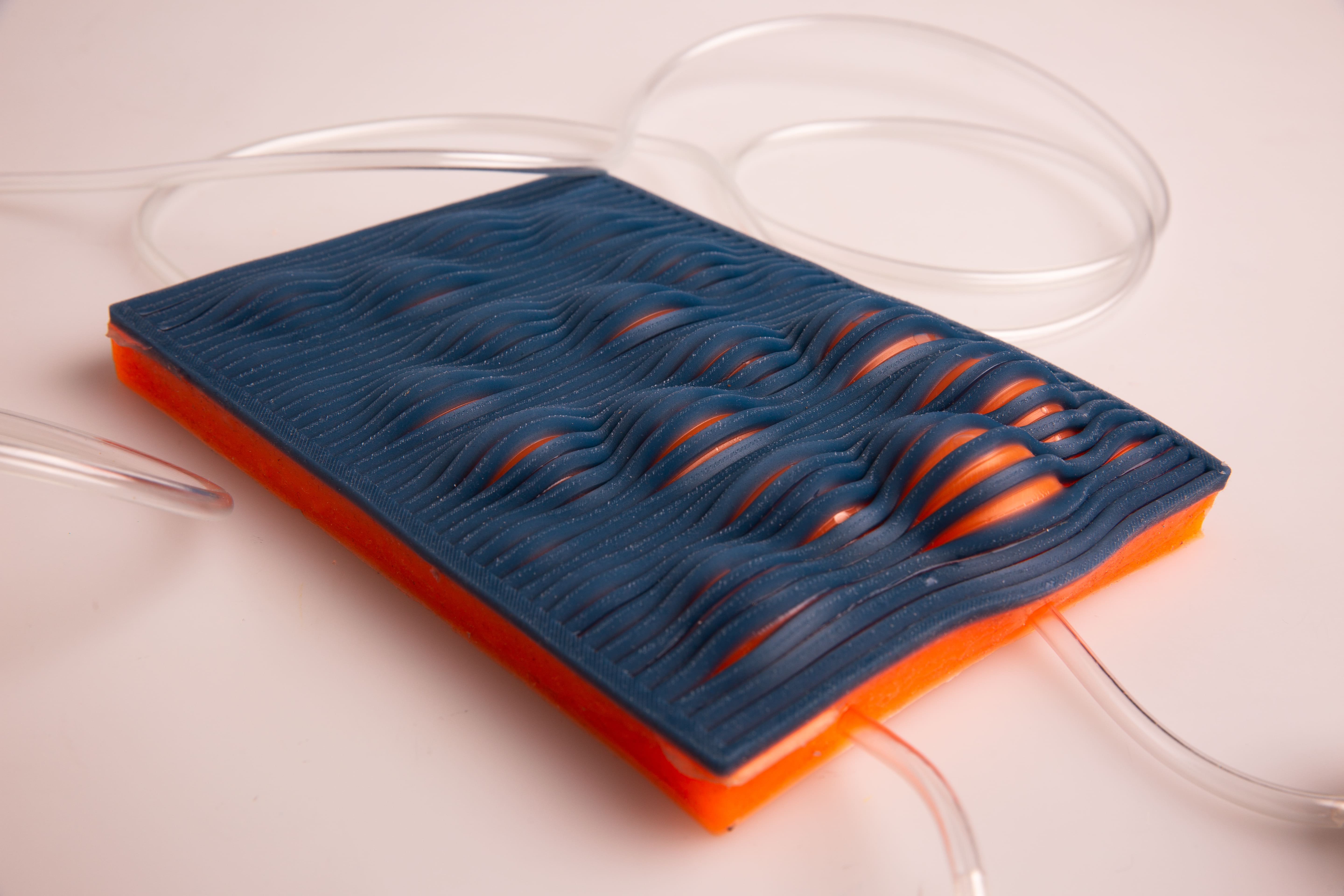
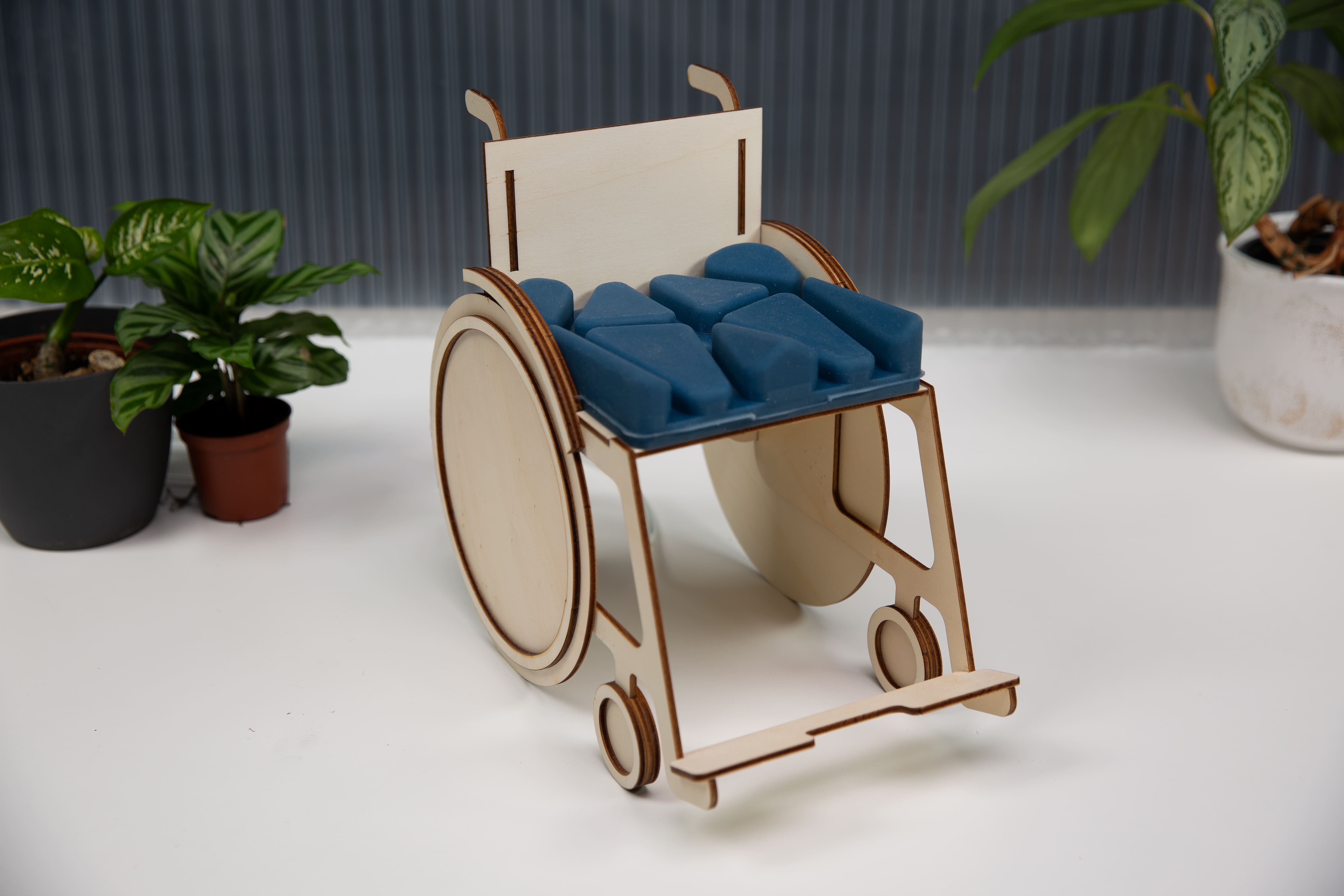
In order to derive the greatest possible benefit from our material properties, we decided to design a product for the medical sector. Soft silicone is ideal for this purpose because it is easy to clean, skin-friendly, and biocompatible.
The result was an anti-decubitus cushion for wheelchair users. This cushion is designed to prevent pressure sores by inflating and deflating the chambers independently from time to time, thus distributing constant, localized pressure across different areas.